1,834 Metres: Bavaria Rebuilds Kehlsteinhaus After Fire
A 33-year-old man has been arrested after a blaze destroyed the historic Alpine retreat, which police describe as likely unsalvageable.
By Jonathan Hoffmann ·
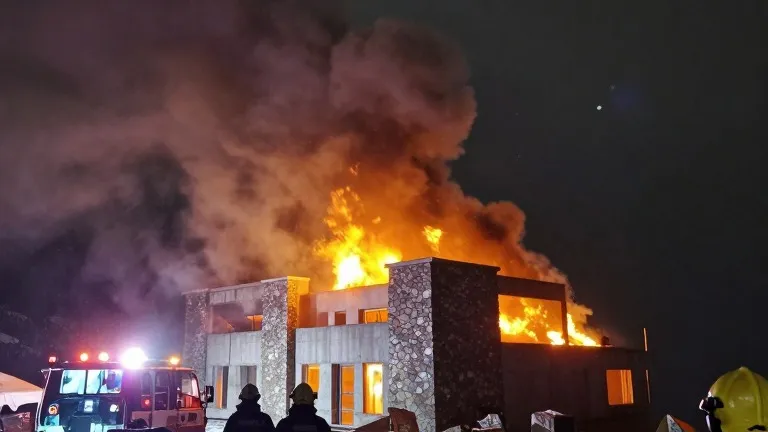
A 1,834-metre retreat on the Obersalzberg peak in southern Germany was reduced to a damaged shell after a fire consumed the structure on Friday night. The blaze targeted the Kehlsteinhaus, the site of Adolf Hitler’s former mountain home, which was largely destroyed by the flames. Police arrested a 33-year-old German citizen in connection with the incident. No injuries were reported, and firefighters found no one inside the building when they arrived.
The fire was detected at 9:15 p.m. via a smoke alarm. By 9:50 p.m., approximately 200 firefighters from six municipalities, the Bavarian Red Cross, and mountain rescue services reached the site to find the building completely ablaze. Lisa Maier, a police spokesperson, noted that the remote location required crews to use heavy breathing apparatus to access the structure. Strong winds and rain, which later turned into the year’s first snow, complicated the effort. Firefighters withdrew overnight after several hours of work.
The fire continued to burn until 7:00 a.m. on Saturday before appearing to be out later that morning. Smoke persisted from the building, leading police to close the road to the site. A spokesperson told Bild newspaper that the house was damaged to a large extent and unlikely to be saved. Investigators suspect arson, although no official cause has been determined. The suspect, who has ties to the area but does not live there, showed signs of mental illness and was sent to a psychiatric facility after questioning. Police said a political motive would be examined, but indicated that no other individuals were involved. Maier announced that a news conference would be held on Saturday.
Built between 1937 and 1938, the Kehlsteinhaus was formally inaugurated by Hitler in 1939. It remains one of the few undamaged monuments from the era. Visitors access the site via a road cut into the mountain, a tunnel, and a 124-metre brass lift. Since 1952, the building has housed a restaurant and an exhibition by the Institute for Contemporary History. The site’s website describes it as preserved as a monument to the insanity of the regime.
The building belongs to the Bavarian state government. Interior Minister Joachim Herrmann told reporters that officials would restore the structure after consulting with local officials, historians, and conservators. He stated that the state was not going to leave a ruin there and emphasized the importance of continuing the work of remembrance.