Breaking: AI Reckoning: Industry Leaders Surprised by Backlash as Market Plunges
OpenAI and Meta executives express shock at the public reaction to data centers just as billions in tech value vanish.
By Elijah Fitzgerald ·
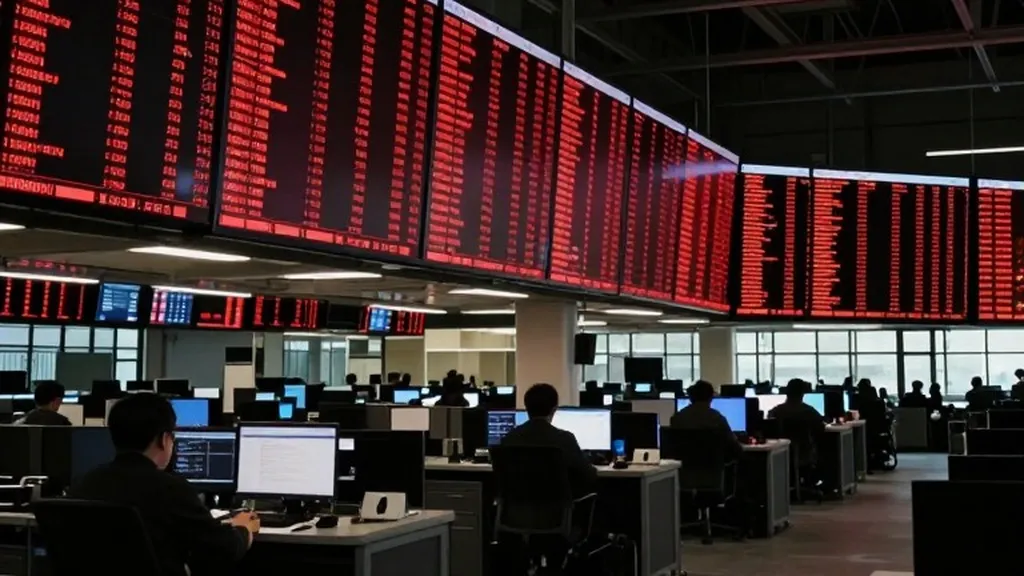
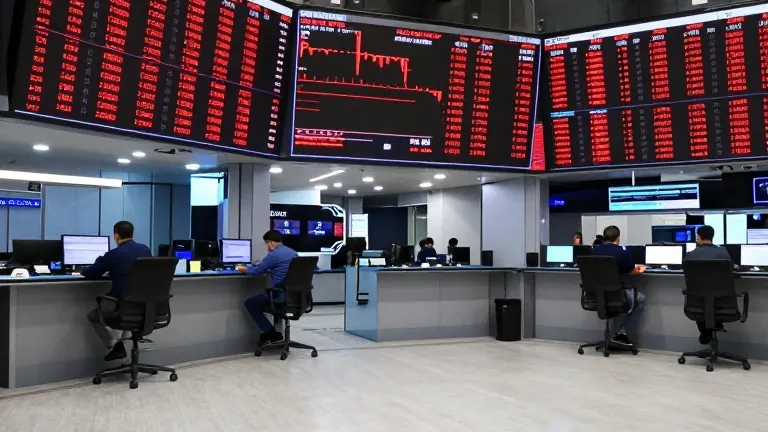
The artificial intelligence sector faced a sudden and severe reckoning on Thursday, November 5, 2026, as the Nasdaq Composite fell 5.5 percent to enter correction territory. This sharp decline followed a period of intense speculation and marked the worst day for the index in eighteen months. The drop erased significant gains and pushed the index more than 11 percent below its record set last month. An estimated 2.5 trillion dollars in market value was wiped from the Nasdaq Composite.
The shockwave hit the most prominent tech firms hardest. The Magnificent Seven technology companies, which include Apple, Nvidia, and Tesla, shed about 1 trillion dollars in value in a single trading day. Nvidia, a key supplier of chips for AI infrastructure, fell 9.2 percent, losing more than 400 billion dollars in market value. The Philadelphia Semiconductor Index, which tracks thirty of the largest chip companies, dropped more than 12 percent. This index is now almost 40 percent below its peak in June, signaling deep concern about the sustainability of the current buildout.
Industry leaders expressed genuine surprise at the intensity of the public backlash against data center expansion. Greg Brockman, president and co-founder of OpenAI, spoke at the WSJ Tech conference in Napa, California, on Wednesday evening. He noted that the company had been caught off guard by the reaction to new facilities. Brockman stated, 'A lot of our shift over the course of this year has really been to realise that from San Francisco trying to build infrastructure in Texas, Georgia, and other places, you can't just tweet and say: This is going to be good. You need to be in those communities.'
Meta's leadership echoed this sentiment of needing to better communicate the benefits of the technology. Dina Powell McCormick, president of Meta, told the same conference that the industry needed to put more effort into making the case for AI. She said, 'I think we need to double and triple down on telling the story.' These comments highlight a gap between the industry's confidence in its long-term value and the immediate concerns of local communities and voters regarding land use and energy consumption.
The market reaction was driven by a collision of political and financial concerns. Susannah Streeter, chief investment strategist at Wealth Club, warned that fresh panic over the AI trade had hit Wall Street hard. She explained that fears that the vast sums poured into AI infrastructure may not deliver the returns investors have been banking on are now colliding with the prospect of a sharp slowdown in data centre construction. This dual pressure created a perfect storm for sell orders across the tech sector.
The political trigger was the Democrats' sweep of the House and Senate in Tuesday's midterm elections. Democrats campaigned on slowing the spread of data centers, and voters rejected data center development in a series of local ballots. In Texas, Democrat Gina Hinojosa won the race for governor after campaigning on an immediate moratorium on new data center construction. This victory, along with wins in Ohio, heightened concerns that the facilities at the heart of the AI buildout will face new regulatory hurdles.
Investors are now weighing whether these tighter state-level restrictions could slow construction and pressure companies tied to the AI trade. This concern is compounded by broader worries that the huge sums being spent on AI may not pay off as expected. The Philadelphia Semiconductor Index has fallen more than 30 percent since the beginning of October. The iShares Semiconductor ETF fell 12 percent on Thursday, its worst day since the breakout in March 2020. The speed of the decline suggests a shift from optimism to scrutiny.
The Dow Jones Industrial Average also fell more than 1,800 points, a drop of 3.4 percent, to 51,868. This decline erased the gains made on Wednesday, which had been the Dow's biggest gain of the year. The S&P 500 fell 4.3 percent, its worst day since April 2025. The selling spread through every sector of the S&P 500 and gathered pace through the day, indicating a broad market retreat rather than a sector-specific issue.
Market volatility spiked in response to the news. The Cboe Volatility Index, known as the fear gauge, jumped as much as 5.7 points to above 28 about 90 minutes after the opening bell. This was its highest reading since March 31, 2026. By midday, nearly 800,000 VIX call options had traded, which is 3.5 times the 30-day average. The 10-year Treasury yield fell to 4.83 percent, its lowest since September, as investors bought bonds as a haven from the equity market turmoil.
Neil Wilson, investor strategist at Saxo UK, described the situation as a complete capitulation-level event in tech stocks. He noted that the fear is a total momentum unwind as Democrats pace the frontier and potentially kibosh datacenter buildout. Wilson added that while the move looks totally overdone, the nature of sell everything in this market means investors need to look for some stability first. The market is currently in a state of high uncertainty as it processes both the political shift and the valuation concerns.
More Business · Unethical Practices · Report a business · Got a Story?