NTSB probes Learjet icing and autopilot after Palm Beach crash
The board is reviewing flight data from the Learjet 60 that descended 10,000 feet per minute before hitting the ground in Florida.
By Jonathan Hoffmann ·
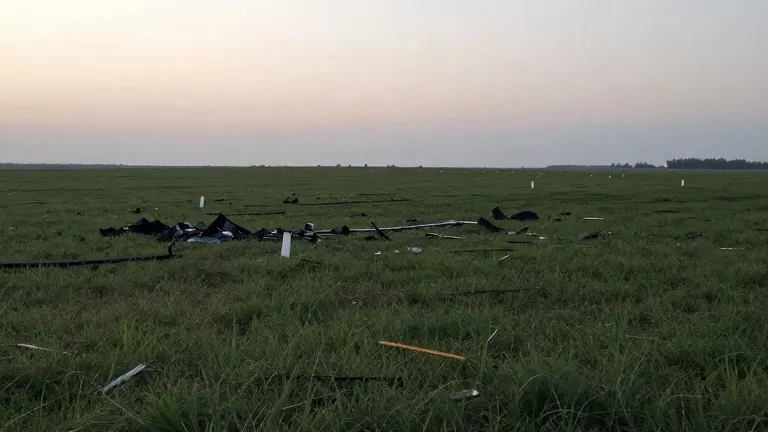
The National Transportation Safety Board is investigating the mechanical systems of a Learjet 60 that crashed in Palm Beach County on Sunday. The accident killed nine people and has prompted a detailed review of the aircraft's de-icing equipment and autopilot controls.
According to the board, the crew was flying at 35,000 feet when they encountered ice accumulating on the plane. The crew reported light, clear ice that was manageable and moderate turbulence. Moments later, they requested permission to climb to 37,000 feet. Investigators confirmed that the crew was cleared to ascend.
Seconds after receiving clearance, the crew declared an emergency. They reported a rapid descent at a rate of 10,000 feet per minute. The aircraft continued to fall until it struck the ground in Palm Beach County.
Pablo Rojas, an aviation attorney with Podhurst Orseck, said icing and turbulence are common flight occurrences. He noted that uncontrolled icing can cause a stall if ice accumulates inside the engines or on the wings. Rojas explained that a stall at that altitude can lead to a catastrophic crash.
Rojas also identified the autopilot system as a key area for investigation. He suggested that if a sensor malfunctions, it could cause the nose to push down. This failure could explain the rapid descent if the pilot lost control of the aircraft. Both the de-icing and autopilot systems are subject to regular inspections, which can occur every 100 hours, monthly, or annually.
Investigators have not yet determined the cause of the crash. They are examining how the storm system on Sunday affected the flight and the weather conditions at the aircraft's altitude. The board must also determine if key components, including the flight recorder, autopilot, and de-icing systems, can be recovered from the crash site.