Bolsonaro Holds 46.3 Percent Lead in Final Brazil Poll
A CNT/MDA survey released on Saturday shows Flavio Bolsonaro ahead of Luiz Inacio Lula da Silva by 1.3 points in the final hours before Sunday's runoff.
By Adewale Fletcher ·
Flavio Bolsonaro and Luiz Inacio Lula da Silva concluded their presidential campaigns on Saturday with rallies across Brazil, setting the stage for a closely contested runoff vote on Sunday. A CNT/MDA poll released on Saturday placed Bolsonaro at 46.3 percent and Lula at 45 percent. The margin of error was 2.2 percentage points.
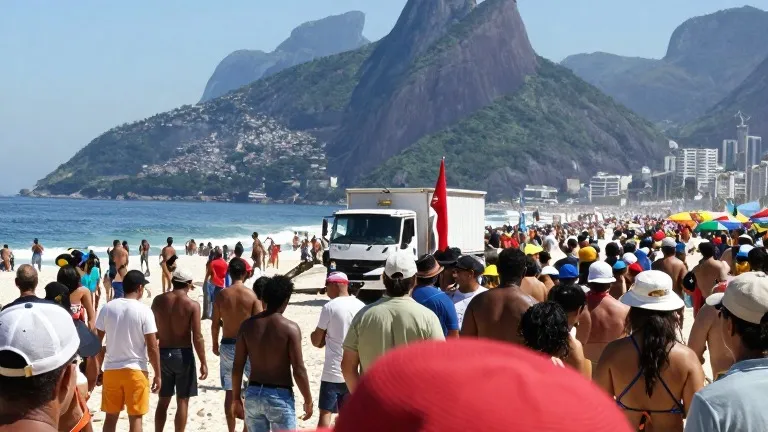
Lula, the 80-year-old incumbent, addressed supporters at Copacabana Beach in Rio de Janeiro. Wearing a red hat, he stood on a campaign truck and waved a Brazilian flag to a crowd of hundreds. He contrasted his platform with that of his rival, saying, "The people must choose either someone who kisses the national flag or someone who kisses the American flag."
Bolsonaro, a senator and the son of former President Jair Bolsonaro, campaigned in the southeastern state of Minas Gerais. His supporters included hundreds of motorcyclists dressed in yellow national football shirts. The first round of voting on October 4 saw Bolsonaro capture 47 percent of the vote, narrowly edging out Lula's 45 percent. The CNT/MDA poll from one week earlier showed a similar gap, with Bolsonaro at 46.8 percent and Lula at 45.9 percent.
The race has centered on divergent views regarding economic policy, crime, and the role of the state. Bolsonaro has pledged to cut government spending and add hundreds of thousands of prison places. His father, who served as president from 2019 to 2022, is currently serving a 27-year prison sentence for attempting a coup after losing the 2022 election.
Supporters expressed strong views on the direction of the country. Ebert Dorigo, a motorcyclist in Minas Gerais, told the news agency AFP that Lula's Workers' Party had encouraged dependence on government welfare. "The values we uphold are nation and family," Dorigo said. He argued that Brazil is divided because welfare policies have hindered the belief that achievement comes through hard work.
The candidates met for a final debate on Friday, where they maintained a calmer tone than in previous exchanges. Despite the shift in atmosphere, they continued to trade accusations regarding Brazil's economic difficulties and their respective records. Gabriela Ribeiro Viana, an event organizer, described the choice for many voters as difficult. "If there were any other candidate, that would be a better option. But we're stuck choosing between the worst, the horrible, and the lesser evil," she told AFP.