California House Race: Lincoln and Gray Battle for Control of the Valley
Two experienced politicians with contrasting policy platforms will compete for the 13th District seat in next month's general election.
By Adewale Fletcher ·
The political landscape in California's 13th Congressional District is shifting as voters prepare to select a representative from two seasoned contenders. On November 3, Democratic incumbent Adam Gray will face off against Republican Kevin Lincoln, a former mayor of Stockton, in a contest that has drawn significant attention from national observers. Both candidates agree that economic affordability is the primary concern for constituents, yet they propose divergent strategies to address the issue.
The path to this general election began with a decisive redraw of district boundaries. Lincoln, a former Marine Corps officer, initially sought to challenge Representative Josh Harder in the 9th District, which encompasses much of Stockton, during the 2024 cycle. However, after losing that race, he adjusted his strategy following the implementation of Proposition 50. This change in district lines moved him into the 13th District, where he now competes with Gray, a former state assemblymember who may be less recognizable to some local residents despite his representation of downtown Stockton.
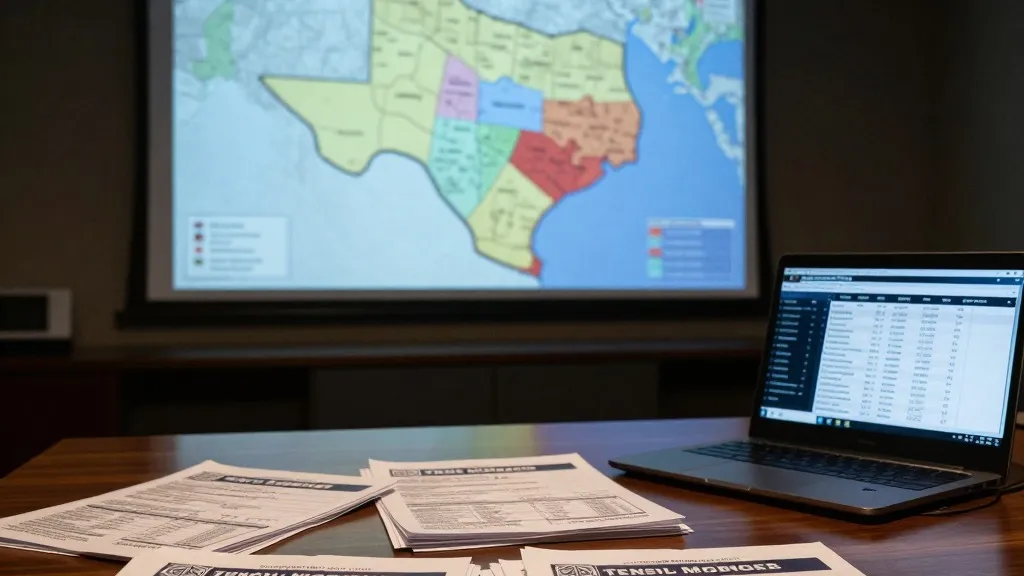
Gray secured his current position two years ago in an exceptionally close contest. He defeated Republican John Duarte by a margin of only 187 votes out of 210,921 total ballots cast. The newly configured 13th District now spans the agricultural core of the San Joaquin Valley and extends south along Interstate 5 to the Coalinga area, bypassing Fresno. According to state records from 2023, the district’s registered voter base was composed of 42.3% Democrats and 28.5% Republicans, a demographic split that remains a critical factor in the upcoming election.
Financial resources appear to favor the incumbent at this stage. Federal Election Commission data from June 30 indicates that Gray has raised $4.2 million in contributions and loans. In comparison, Lincoln has secured $2.2 million. Despite the funding gap, Lincoln benefits from high-profile support. President Donald Trump publicly endorsed him in December via Truth Social, declaring that he offers his "Complete and Total Endorsement." Lincoln expressed gratitude for the backing and continues to feature the endorsement prominently on his campaign materials.
The presidential support proved effective during the primary, though Democratic strategists remain cautious. They anticipate that rising fuel costs and intensified immigration enforcement measures associated with the Trump administration may impact Lincoln's standing. To bolster his image, Lincoln produced a video for the National Republican Congressional Committee titled "MAGA Majority." In the clip, he highlights his tenure as mayor, his role as a pastor, and his military service. His LinkedIn profile notes that he served in the Marine Corps' White House Military Office from 2001 to 2005, where he guarded Marine One, and he served as executive pastor at LifeSong Ministries until 2020.
Lincoln frames his campaign around the goal of making home ownership accessible again, a step he believes will restore the American dream. He criticizes Gray for voting to increase taxes during his time in office. At a rally in September, Lincoln outlined a platform focused on reducing the cost of essentials like gas, food, and utilities, while also promising job creation and expanded healthcare access. He described himself as someone who understands how to work hard and win difficult contests.
Gray, who was born in Merced, offers a counter-narrative that emphasizes independence over strict party allegiance. He has described the president's deportation policies as irresponsible and dangerous. Speaking to the Sacramento Bee, Gray stated that voters desire an independent voice rather than one defined by Democratic or Republican labels. As a whip for the Blue Dog Coalition, a group of moderate legislators, he highlights his efforts to bridge political divides. His legislative record includes attempts to reverse Medicaid reductions and limit the executive's power to impose tariffs without congressional consent. He also introduced a bill to streamline regulations related to thermal energy, pointing to recent spikes in gasoline and diesel prices linked to the conflict with Iran as evidence of the need for such measures.
The two candidates are poised to trade blows over specific economic metrics in the final stretch. Lincoln argues that Gray increased the gas tax by more than 113% per gallon while serving in the California Legislature. Gray responds by citing his work on energy regulation and his resistance to unilateral trade actions. With the election date approaching, both campaigns are intensifying their outreach to undecided voters in a district that has historically seen narrow outcomes.
More Politics · Lincoln news · Report a business · Got a Story?