Fassuliotis urges Greenwich police to prioritize street patrols over traffic cameras
Newly appointed magistrate argues cameras capture only narrow violations while missing the widespread reckless driving that plagues local roads.
By Elijah Fitzgerald ·
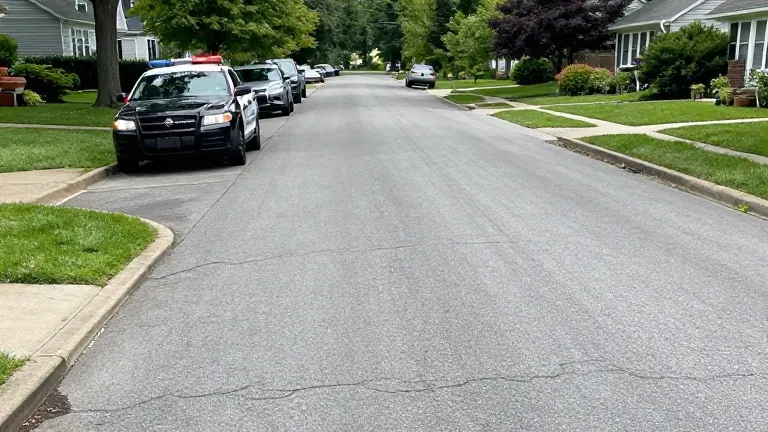
Newly appointed Greenwich magistrate Karen Fassuliotis has called on local law enforcement to keep traffic cameras offline and instead increase visible police patrols.
In an open letter addressed to Police Commissioner Camillo and Chief of Police Heavey, Fassuliotis stated that she is not a proponent of the town's traffic camera program. She described the automated system as a tax on residents that removes enforcement decisions from the judgment of trained officers.
The state recently approved Greenwich's plan to reinstate the traffic camera program. This move follows the shutdown of the existing cameras due to procedural errors and a subsequent class action lawsuit filed over the initiative. Fassuliotis argued that the recent approval raises questions about whether the town is pursuing the right approach to traffic safety.
Fassuliotis detailed a single drive through Greenwich to illustrate the gaps in camera-based enforcement. While traveling at 25 mph, she observed a car riding her bumper, another vehicle sailing through a stop sign at Patterson and Deer Park Roads, and tradesmen’s trucks parked along Maher Avenue despite no-parking restrictions. She also noted a driver making a right turn on red at Maher Avenue and East Putnam Avenue against posted signs, and another driver running a red light on the Post Road.
During the drive, Fassuliotis maintained the posted speed limit in a school zone on Milbank Avenue, where a car behind her honked for her to speed up. She also witnessed an adult on a motor scooter bypass a stop sign near Julian Curtiss School and a driver proceeding through an intersection while a pedestrian waited to cross. Fassuliotis noted that none of these specific behaviors, except perhaps the red light violation, would have been corrected by additional traffic cameras.
The magistrate argued that cameras address only a narrow category of violations at predetermined locations. She stated that a camera cannot consider the circumstances of an incident, distinguish between a momentary mistake and dangerous driving, or exercise the discretion essential to responsible policing. Fassuliotis emphasized that the town needs officers monitoring intersections, enforcing stop signs, and addressing illegal parking where violations are actually occurring.
Fassuliotis distinguished between collecting fines and improving public safety. She said success should be measured by improvements in driving behavior rather than the number of citations or dollars generated. She added that she is purchasing a personal dash camera to document what she sees on the roads, but she argued that residents should not have to become their own traffic enforcement officers.
The letter closes with a request that the police commissioner and chief of police keep the cameras turned off. Fassuliotis asked them to make meaningful, visible traffic enforcement a priority throughout Greenwich. She noted that her offer to use her driveway for police monitoring of speeding and other infractions on her street remains open.