Gulf Tensions: Iran Bans US Navy From Persian Gulf
Brent crude rose to $117 per barrel as Iranian military leaders declared American warships targets following President Trump's ambiguous comments on further strikes.
By Elijah Fitzgerald ·
Brent crude reached approximately $117 per barrel on Saturday, marking its highest level since April, as Iran’s military issued a formal ban on United States Navy vessels entering Iranian territorial waters. The price surge followed statements from Ali Abdollahi, the chief of general staff of Iran's armed forces, who declared that American ships could not re-enter the region because Iranian forces could target any vessel in the area.
President Donald Trump addressed supporters at a rally in Florida on Friday, suggesting the US military might launch another "Epic Fury" operation, a reference to the bombing campaign that began the conflict. He had previously considered ending the war with massive strikes or maintaining pressure through a naval blockade and sanctions. Abdollahi responded to these comments by stating that the US president could only dream of his soldiers returning to the Persian Gulf.
The Iranian military chief argued that Washington's actions contradict its rhetoric about the destruction of Iran's military capabilities. He noted that the US has not moved aircraft carriers and support ships closer to Iranian territory. Abdollahi said Iranian forces intend to trap the US and Israel in a quagmire in retaliation for a surprise attack on February 28 that started an eight-month war.
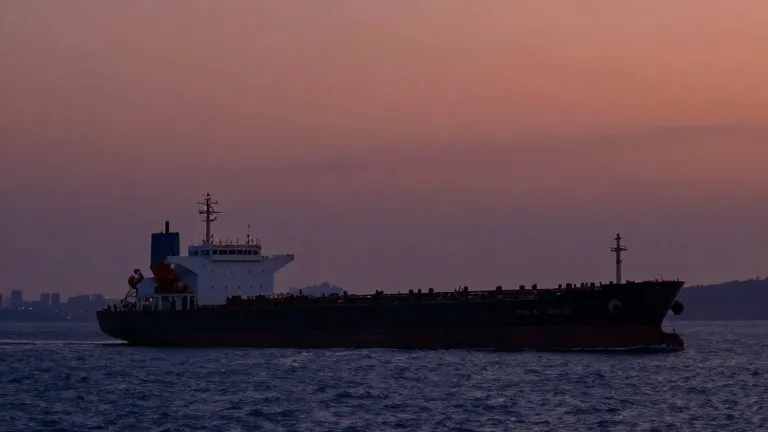
Shipping in the Strait of Hormuz remains under threat. The Islamic Revolutionary Guard Corps reported that seven tankers were attacked or hit mines overnight into Thursday and claimed two supertankers struck mines on Friday. In related developments, Houthi forces in Yemen struck Riyadh on Saturday, following recent attacks on Dammam's international airport and the Shaybah oilfield. Saudi forces responded by bombing Houthi-held areas in Marib and Taiz.
Diplomatic efforts to resolve the conflict stalled in Istanbul, where senior diplomats from Turkiye, Saudi Arabia, Pakistan, and Egypt met with counterparts from the UK, France, Germany, and Italy. Neither the US nor Iran attended the talks. Hakan Fidan, the Turkish Foreign Minister, stated that a new attack on Iran would widen the war and spread the conflict across the region.
Iranian state-linked media reported that Tehran activated a "dead hand" doctrine, which would allow attacks on US and Israeli interests to continue from all 31 provinces if senior leaders are assassinated. The IRGC also threatened to target seabed internet and communication cables if civilian infrastructure is struck again. Reformist newspaper Etemad suggested the "zero hour" for another intense round of fighting was approaching.
Israeli Prime Minister Benjamin Netanyahu, facing an election on October 27, ordered a lockdown of the occupied West Bank after a Palestinian attack killed two soldiers in Hebron. In southern Lebanon, Israeli air strikes hit areas around Nabatieh, and artillery fell near Zawtar ash-Sharqiyah. Washington reportedly ordered many diplomatic staff to leave Saudi Arabia, with additional departures planned from other regional countries.