iPod Marks 25 Years: How a $399 Card-Sized Player Reshaped Music
Two and a half decades after its debut, the original iPod's 5GB storage and FireWire speed defined the portable audio market.
By Adewale Fletcher ·
It has been exactly 25 years since Apple introduced the device that fundamentally changed how consumers carry their audio collections. On October 23, 2001, then CEO Steve Jobs unveiled the original iPod, a product that promised to fit a user's entire music library into a pocket-sized package. The launch marked a pivotal moment in personal computing history, shifting the focus from desktop hubs to portable, always-available entertainment.
The device was priced at $399, a significant sum that Jobs justified by emphasizing the sheer volume of content the hardware could hold. The first model featured 5 gigabytes of storage, a capacity that allowed it to store approximately 1,000 songs. For the average listener in 2001, this meant accessing their complete collection without the bulk of a CD case or the limitations of a flash drive.
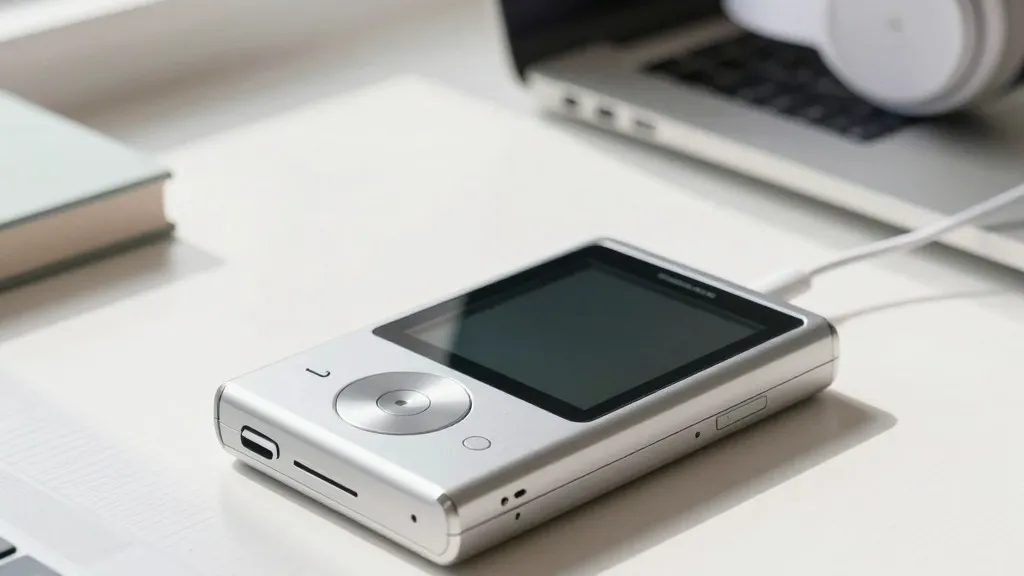
Apple’s strategy relied on positioning the computer as the center of a digital lifestyle. Jobs argued that while other manufacturers had portable players, none had found the right recipe for digital music. He identified hard disk-based players as the optimal entry point, leveraging a partnership with Toshiba for an ultra-compact 1.8-inch hard drive. This component was critical to the design, enabling the device to be just the size of a deck of cards, measuring 2.4 by 4 by 0.78 inches.
Weight was a major selling point, with the player tipping the scales at just 6.5 ounces. Jobs noted in his presentation that this made it lighter than most cell phones of the era. The physical design emphasized minimalism and durability, featuring a scroll wheel with tactile feedback that allowed for one-handed navigation through playlists, artists, or individual tracks.
Speed was another key differentiator. The original iPod utilized a FireWire 400 connection, which was significantly faster than the USB standards available at the time. According to Apple, transferring a single CD of music took only five to 10 seconds. In contrast, USB connections could take up to five minutes for the same task. Filling the entire device with 1,000 songs was estimated to take just 10 minutes, a stark improvement over the five hours required for competing USB players.
The player also offered practical features such as 20-minute skip protection to handle physical bumps during movement. Power was provided by a rechargeable lithium-polymer battery that supported 10 hours of continuous playback. Users could recharge the battery to 80 percent in roughly one hour, ensuring the device was ready for extended use.
Integration with Apple’s software ecosystem was the final pillar of the product’s appeal. The launch coincided with the release of iTunes 2, which introduced Auto-Sync. This feature ensured that any music library curated on a Mac was automatically mirrored to the iPod during charging or data transfers. The device also functioned as a standard FireWire hard drive, adding versatility beyond music playback.
Although the iPhone arrived in early 2007 and eventually absorbed many of the iPod’s functions, the two product lines coexisted for over a decade. The iPod’s legacy endured until the final model, the 7th-generation iPod Touch, was released in May 2019. The line remained technically active but unmaintained until its official discontinuation in May 2022.
The 25th anniversary of the iPod highlights how a single device can alter industry standards. By combining substantial storage, rapid data transfer, and intuitive design, Apple established a template for portable media players that competitors would attempt to replicate for years.