
Orbital Uncertainty: Ukraine Seeks Satellite Alternatives After Service Glitches
With Starlink reliability wavering due to political tensions, Kyiv and European allies are urgently re-evaluating their dependence on Elon Musk’s satellite network.
By Jonathan Hoffmann ·
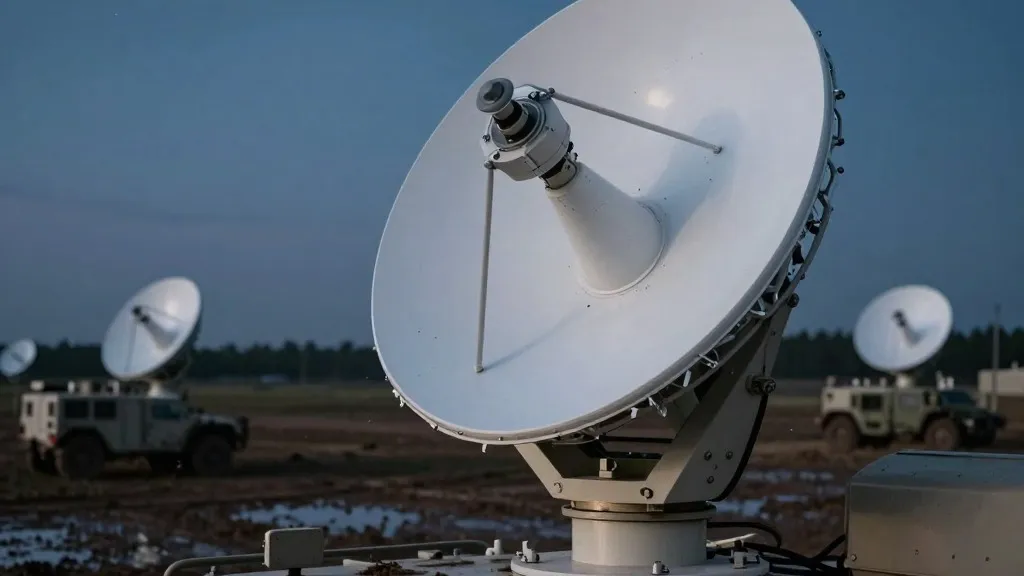
The digital lifeline that has sustained Ukraine’s defense against Russia is fraying. For years, Elon Musk’s Starlink constellation has been the backbone of Kyiv’s resistance, providing critical connectivity for both civilian infrastructure and military operations. However, a combination of service disruptions and the CEO’s increasingly visible political maneuvers has left Ukrainian leaders and their European partners scrambling. The central question now dominating defense planning in the region is how to maintain operational continuity if the most reliable satellite network in the world becomes politically volatile.
The urgency of this shift is driven by Starlink’s unique position in the market. As the world’s largest communications satellite network, it offers high-speed internet and data streams through compact terminals that are easy to deploy. This capability has been instrumental in allowing Ukraine to maintain vital communications and, crucially, to remotely control and guide drones. These drones are essential for air defense against Russian strikes and for hitting targets deep within enemy territory. Without this constant link, the precision and speed of Ukrainian counterattacks would be significantly hampered.
Despite its dominance, the system is not without technical constraints. According to the head of hardware research and development at Ukrainian defense firm BlueBird Tech, Starlink currently provides the best satellite coverage available, with virtually no competitors matching its combination of cost, availability, and ease of use. However, the representative noted a practical limitation that remains consistent regardless of political factors: the antenna must be positioned correctly to receive signals from the satellites. This physical requirement is a fixed variable in an otherwise unpredictable technological landscape.
The financial and logistical support for this infrastructure has been substantial. The US government, along with European nations including Poland and Germany, has funded the procurement of tens of thousands of commercial Starlink terminals for Ukraine. These allies have also covered the ongoing subscription fees, ensuring that the service remains active despite the high operational costs. This multinational investment highlights just how deeply integrated Starlink has become into the allied support structure for Ukraine.
Beyond the commercial terminals, there is a deeper layer of technological integration. The US government has granted Ukraine’s military access to a military-grade variant of the service known as Starshield. This advanced system allows Ukrainian defense companies to test their own technologies in close cooperation with the military, leveraging the robustness of the Starshield network. The BlueBird Tech representative confirmed that this access is vital for developing new defense capabilities that rely on secure, high-bandwidth satellite links.
As the geopolitical landscape shifts, the reliance on a single commercial provider raises strategic risks. The recent disruptions have forced a reassessment of supply chains and backup systems. While Starlink remains the gold standard for performance and accessibility, the political dynamics surrounding its control are introducing a new variable into the equation. For Ukraine and its allies, the path forward involves not just finding replacements, but understanding the extent to which the conflict has been shaped by a private satellite network, and how to mitigate the risks inherent in that dependence.
The outlook remains tense as both sides weigh the costs of transition against the benefits of staying. With no immediate competitor offering the same level of service at the same price point, the search for alternatives is complex. The next phase of the conflict may depend as much on diplomatic and logistical maneuvering as on battlefield tactics, as Ukraine works to secure its digital sovereignty in an era where satellites are as strategic as soldiers.