SpaceX Declines Three Military Launch Contracts as European Rocket Approves Final Integration
The aerospace sector saw significant shifts this week, marked by SpaceX's rejection of new defense work and PLD Space's progress on its Miura 5 vehicle.
By Adewale Fletcher ·
The commercial space sector has experienced a period of strategic realignment, with major players adjusting their operational priorities and development timelines. This week brought distinct developments for both American and European aerospace firms, highlighting the complex balance between commercial ambitions, military requirements, and technical readiness.
In a notable shift in its defense portfolio, SpaceX has informed the United States Space Force that it will not pursue three offered military launch contracts. The company’s decision to decline the work represents a significant pause in its expansion into the defense market. While the specific financial details of the rejected contracts were not disclosed, the move suggests a temporary focus on other operational priorities or internal resource allocation within the company.
This decision coincides with new technical constraints identified in the development of SpaceX’s Starship program. A NASA safety panel recently indicated that the vehicle may require up to 22 refueling operations to support a lunar landing mission. This assessment underscores the substantial logistical and engineering challenges still facing the program as it aims to achieve its primary objectives for crewed lunar missions.
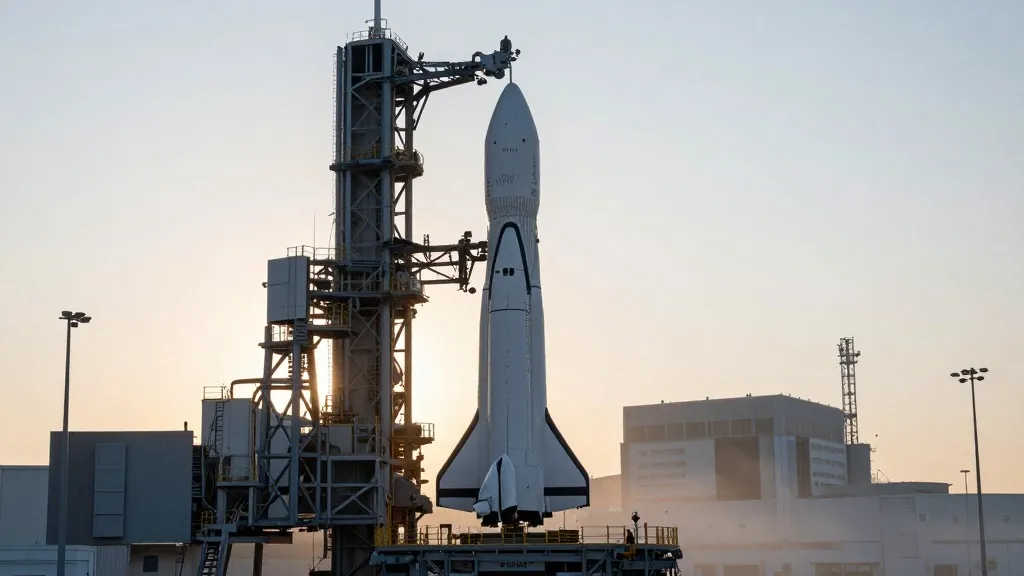
Across the Atlantic, PLD Space is advancing its Miura 5 rocket toward its inaugural launch. The Spanish company recently reported that the vehicle is nearing final integration, a critical step before its maiden flight. According to CEO Raúl Torres, the company has already manufactured three Miura 5 units, with two of them dedicated to qualifying key system elements. The current target for the first flight of this small-lift vehicle has been set for before mid-2027.
The production of these three vehicles has allowed PLD Space’s engineering teams to work continuously across various stages of production and integration. Torres noted that lessons learned from each qualification campaign have been directly applied to the final launch vehicle. Currently, one Miura 5 second stage is fully integrated and has begun system-level testing under conditions that simulate actual operations.
The qualification process is taking place at PLD’s test facility in Teruel. Here, the integrated second stage is undergoing a rigorous campaign that includes a wet dress rehearsal and a static hot-fire test. These tests are essential for validating the reliability of the propulsion and structural systems before the rocket is cleared for its orbital attempt next year.
Meanwhile, in the Canadian launch startup landscape, Reaction Dynamics is seeking to significantly expand its capabilities. The company announced it is looking to raise $350 million in new funding. This capital injection is intended to support a substantial growth in its workforce, expanding from its current staff of 68 to more than 350 employees.
This financial push aligns with Reaction Dynamics’ development roadmap for its small-lift Aurora rocket, which the company hopes will reach orbit in 2028. Beyond the Aurora, the firm has also outlined plans to develop a medium-lift rocket named Borealis. The debut of the Borealis is currently targeted for 2031, indicating a long-term strategy to capture a broader segment of the global launch market.
These simultaneous developments illustrate the diverse trajectories currently shaping the aerospace industry. While SpaceX navigates a more selective approach to military contracts and faces technical hurdles in its lunar program, European and Canadian firms are focusing on scaling production and securing funding to bring their next-generation vehicles to the market.
As these companies proceed with their respective milestones, the coming months will provide further insight into how these strategic decisions impact the competitive landscape of commercial spaceflight. The industry remains closely watched for updates on launch schedules, funding rounds, and technical breakthroughs that will define the next phase of space exploration.