Libya Seals $100 Billion Turkey Maritime Deal
The unanimous vote overturns a 2019 split and places the corridor directly in the path of Greece's exclusive economic zone claims.
By Adewale Fletcher ·
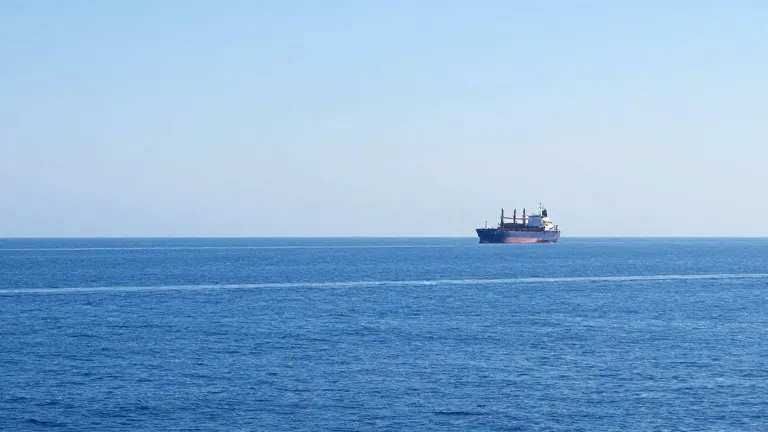
Libya’s parliament voted unanimously on Tuesday to ratify a maritime agreement with Turkey that creates a direct economic link between the two countries' coasts. The decision reverses a long-standing internal division and immediately drew sharp opposition from Athens.
The corridor connects Turkey's southern shoreline with Libya's northern coast. Geologists estimate that natural gas reserves in this specific seabed area are worth several hundred billion U.S. dollars. Ankara and Tripoli intend to jointly secure and exploit these resources through the new framework.
The vote marks a major shift in Libyan politics. In 2019, the rival government in the east opposed the original deal, which Turkey had agreed upon with the UN-recognized government in the west. That eastern parliament has now aligned with Tripoli. Turkey’s Foreign Ministry welcomed the outcome, signaling a deepening strategic partnership.
Greece objects to the route because it ignores the positions of Crete, Karpathos, and Rhodes. Athens maintains that these islands possess exclusive economic zone rights under Article 121 of the UN Convention on the Law of the Sea. The Greek Foreign Ministry stated on X that it firmly rejects the accord, noting that the European Union has declared the memorandum null and void because it violates the sovereign rights of third states.
Kaja Kallas, the EU’s high representative for foreign affairs and security policy, echoed that stance. She wrote on X that the Libyan vote infringes upon the sovereign rights of third states. Greece points to a 2022 ruling by the International Court of Justice involving Colombia and Nicaragua, which held that overlapping maritime interests require a fair demarcation based on coastline and geography.
Turkey argues that the geography of the Mediterranean demands special consideration. Ankara contends that granting full exclusive economic zones to every small Greek island near its coast would cut Turkey off from the open sea. Because Turkey never signed the convention, it does not accept arbitration by a UN tribunal. Legal experts remain divided on how to divide the area fairly.
The agreement also complicates plans for the EastMed pipeline, which is designed to carry gas from Israel and Cyprus through Greece to the EU. The new corridor cuts across the pipeline's intended route. Turkish firms have won reconstruction contracts in eastern Libya, and the state oil company TPAO is currently conducting seismic surveys with Libya's National Oil Corporation.