Physical Controls Return: Drivers Reject Touchscreen-Only Interfaces
Nissan design manager Hiren Patel explains why the industry is pivoting away from switchless dashboards after years of driver complaints regarding distraction and complexity.
By Adewale Fletcher ·
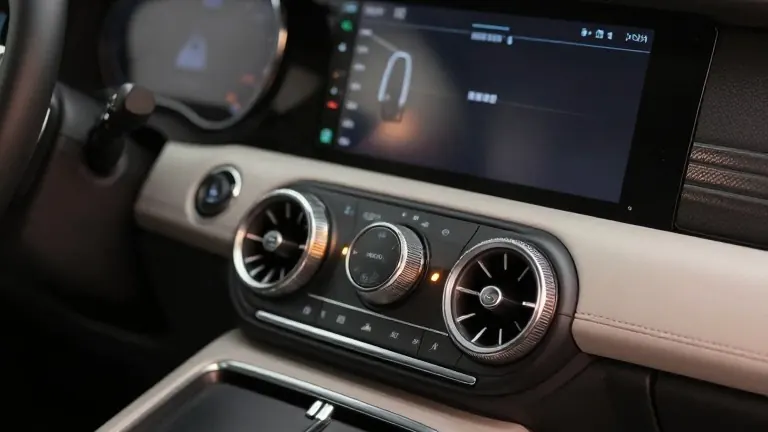
Automakers are reversing a five-year trend toward minimalist, switchless interiors, a shift driven by widespread driver frustration with complex touchscreen controls. The move abandons the "software experience" aesthetic that prioritized cost savings over usability, acknowledging that physical buttons and levers remain faster and safer for frequent adjustments.
Hiren Patel, senior design manager at Nissan, attributed the initial push for digital-only dashboards to a desire to reduce manufacturing complexity. During the height of the trend, engineers and designers believed eliminating physical switches would save money on tooling and parts while creating a sleeker look. Patel noted that the industry was focused on making interiors resemble a software interface rather than a functional cockpit.
The design choice proved popular in dealership showrooms but less so on the road. Patel observed that many owners complained about the distraction of using touchscreens for basic tasks. He stated, "It takes my eyes off the road to change the temperature or to adjust my seat or do whatever." Drivers found the interaction less intuitive than using a smartphone, where controls are immediately accessible at the fingertips.
The complexity of modern vehicles has exacerbated the issue. Cars now contain numerous subsystems that require constant management, yet manufacturers have not converged on a unified control method. Patel noted that different companies use different menu structures, leaving drivers to navigate inconsistent interfaces. He described the experience as having to move through various menus to perform simple functions, a problem compounded by the lack of a standard solution across the industry.
The return of physical controls signals a correction in automotive design philosophy. The industry is moving away from the "Piano Black" aesthetic that defined the previous decade and is refocusing on tangible user interfaces. This shift aims to reduce cognitive load for drivers while maintaining the modern appearance that consumers expect from new vehicles.