
FCC Halts New Dashcams and Video Gear Over Embedded Huawei Chips
The regulator blocked two specific products from the US market by focusing on the silicon inside them, a strategy designed to catch rebranded imports that slip past traditional brand-based bans.
By Jonathan Hoffmann ·
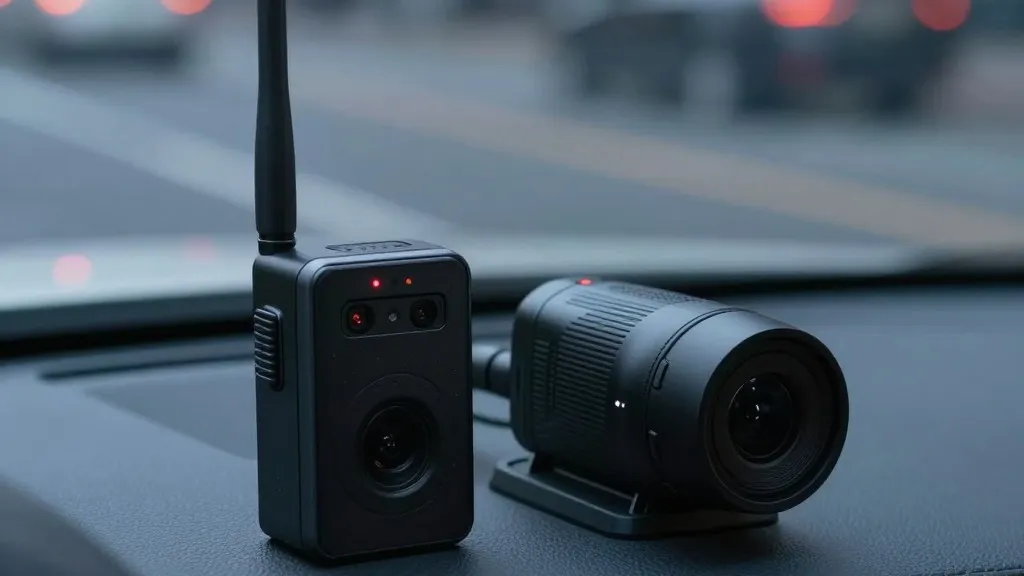
A significant shift in federal regulation has landed, with the Federal Communications Commission blocking two consumer electronics from entering the American market. This action marks the first instance where the agency has relied on the internal hardware of a device, rather than its external branding, to justify a ban. The move creates a new layer of friction for importers and consumers alike, signaling that the identity of the processor now matters as much as the label on the box.
The two products under the gun are a dashboard camera and a wireless video transmitter. Both were pulled from circulation because they utilize a system on a chip made by HiSilicon, a subsidiary of Huawei. Since Huawei and its affiliates sit on the FCC's Covered List, they are viewed as potential risks to national security. By targeting the chip itself, regulators aim to close a gap that previously allowed rebranded goods with Chinese components to slip through customs.
The specific component in question is the Hi3516CV610 UHD Smart Vision processor. Designed for surveillance and camera applications, this unit integrates WiFi, Ethernet, video encoding hardware, an Arm Cortex-A7 core, and a neural processing unit. It is this last part, the NPU, that has drawn the FCC's scrutiny. The agency classifies it as a device with logic-bearing smart components, a designation that triggers the new enforcement rules.
Technical documentation for the chip reveals that its Intelligent Video Engine relies on the NPU to run a built-in multimodal large model. It uses transformer feature acceleration to track objects across video frames, maintaining focus on subjects like pets, human faces, and parcels. While this functionality helps consumers distinguish between a pet escaping and a stranger taking a package, the regulator sees a dual-use potential. The same AI capability could theoretically be used to map citizens and log faces for foreign surveillance purposes.
This is not the first time Huawei has found itself at the center of a chip-related dispute. The company was previously involved in a controversy where it used shell firms to trick TSMC into manufacturing AI chips despite US restrictions. That incident, along with others, has paved the way for the current product bans. The precedent set by today's ruling suggests that future enforcement will be more granular, looking under the hood of devices rather than just checking the manufacturer's name.
Market reaction to the decision has been varied. Some observers view the move as a form of protectionism, questioning if domestic surveillance is fundamentally different from foreign efforts. Others have debated the scope of the FCC's authority, with arguments citing the Communications Act of 1934 to support coverage of both wired and wireless communications. A different school of thought argues that this silicon-based approach is overdue, given the complex supply chains and regional variations that modern electronics undergo.
More Business · Tech news · Unethical Practices · Report a business · Got a Story?