Just under $13 million spent to remove masts from WWII wreck
Crews successfully dismantled the three masts of the SS Richard Montgomery, though the ship's heavy cargo of explosives remains untouched on the seabed.
By Jonathan Hoffmann ·
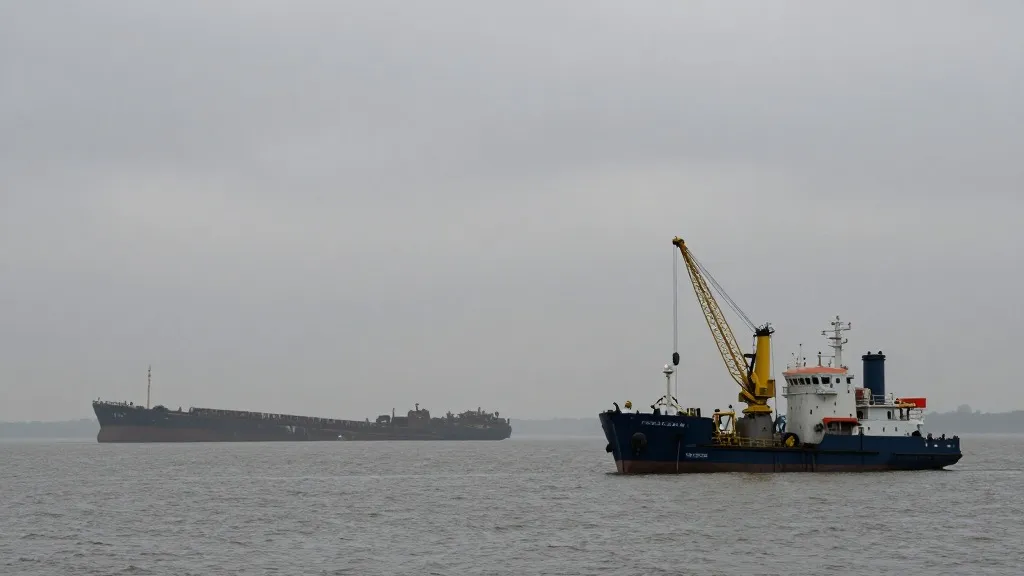
A major safety project near London has concluded, with officials confirming that the rusting masts of a World War II shipwreck have been removed. The operation was designed to reduce the risk of a catastrophic accident involving the vessel's remaining cargo. This marks the end of a decades long process to manage the site.
The SS Richard Montgomery ran aground in the Thames Estuary in August 1944. The U.S. built ship was carrying roughly 1,500 tons of munitions intended for the Allied war effort. It broke apart during salvage attempts and sank near Sheerness, about 40 miles from the capital. For many years, the three masts remained visible above the waterline. However, recent inspections showed the structure was deteriorating. There were growing concerns that the masts could collapse and trigger an explosion.
Nolan Conway, a naval architect with Resolve Marine Group, explained the danger. He noted that the vessel had started to lean. Conway stated that the fear was the masts falling onto the cargo. He added that some munitions likely have pressure fuses. This means a hard impact could set them off. The primary engineering challenge was cutting the masts without shaking the wreck. The team built a custom lifting frame to raise each piece safely. They also used a remote underwater diamond wire saw to cut the masts, avoiding the need for divers.
U.K. maritime minister Keir Mather told the House of Commons that the project was finished ahead of schedule. The total cost was just under $13 million. Mather said the masts placed significant load on the structure. Removing them reduces that risk. It also supports the long term safe management of the site. The explosives themselves have not been moved. Experts agree that extracting them would carry considerable risks.
There is still debate about what would happen if the cargo did detonate. Conway said estimates vary widely. Impacts could range from minor shoreline effects to a tidal wave moving up the Thames. Other estimates suggest a smaller event that might only close a shipping channel. Conway described the range of potential impacts as large, though none were good. Officials still believe the overall chance of an explosion is low.
The government maintains an exclusion zone around the wreck, which sits about 1.5 miles off the coast. Mather confirmed that the site will continue to be monitored through this zone. The removed masts are expected to be preserved. They have been moved to the Historic Dockyard Chatham museum. They will be displayed to recognize the ship's role in supporting Allied forces. The Montgomery and its cargo will remain where they rest, now out of sight but still under watch.