California's Wealthy Face Potential $12.5 Billion Bill in Historic Tax Vote
A proposed one-time levy on the state's ultra-wealthy aims to rescue healthcare funding, but critics warn it may push more billionaires out of the Golden State.
By Elijah Fitzgerald ·
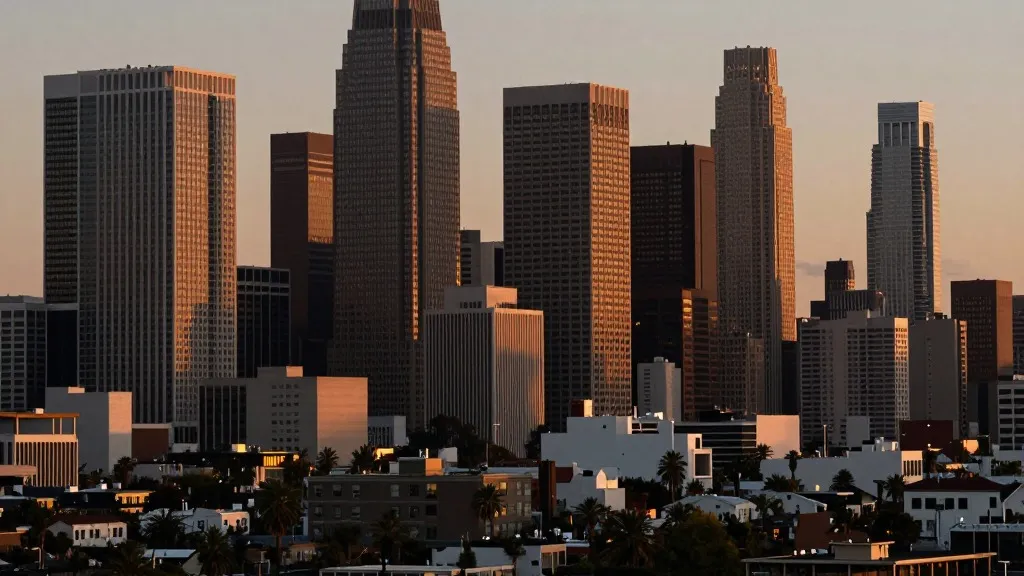
The financial fate of over 200 of America's wealthiest residents hangs in the balance as Californians prepare to vote on a historic wealth tax. This ballot measure, known as Proposition 40, would impose a one-time 5% tax on the net worth of every billionaire residing in the state. The proposal targets a group that includes prominent figures such as Oprah Winfrey, Mark Zuckerberg, Kim Kardashian, and George Lucas.
The initiative is designed to raise approximately $100 billion to offset federal funding cuts to the state's healthcare system. These cuts stem from the recent tax and spending legislation signed by President Donald Trump. Suzanne Jimenez of the Service Employees International Union-United Healthcare Workers West described the measure as a necessary short-term fix. She warned that without intervention, the state's healthcare infrastructure could face a collapse while a longer-term solution is developed.
California possesses the largest economy in the United States and ranks fourth globally. Despite this economic power, the state also has the nation's largest share of homeless people and one of the widest wealth gaps. Francesco Trebbi, a public policy professor at the University of California, Berkeley, believes this could be the first billionaire tax of its kind in history. He noted that it targets an extreme percentile of the wealth distribution.
Governor Gavin Newsom, whose term is ending, is a prominent opponent of the measure. He argues that the tax could drive wealthy residents and their associated income tax revenue out of the state. Recent polling by the Los Angeles Times and the Berkeley Institute of Governmental Studies shows a tight race, with 45% of likely voters in favor and 42% opposed. A simple majority is required for the proposal to pass.
The threat of the tax has already prompted some action. At least six billionaires have reportedly left California, including Google co-founders Larry Page and Sergey Brin. Don Hankey, founder of the Hankey Group, told Forbes he moved to Nevada because the proposal made him feel unwanted. Mark Zuckerberg, who could owe up to $12.5 billion, informed his company's board last month that he was considering moving his primary residence. Meta agreed to a new stock deal to help him cover the potential loss.
Supporters argue that the tax is a fair response to growing inequality. Nvidia chief Jensen Huang told CBS that he does not mind paying taxes and believes those who earn more should pay more. Senator Bernie Sanders echoed this sentiment at a recent rally, stating that billionaires believe they have a God-given right to rule. He predicted that voters would send a powerful lesson on November 3.
The vote comes as US inequality reaches its highest level in over three decades. In the third quarter of 2025, the top 1% of households held nearly 32% of the nation's wealth. Trebbi suggests the measure is driven by an anti-elite sentiment rather than just the specifics of the bill. He views it as an effort to re-balance the economic scale in a state where many feel the gap between rich and poor is widening.