Nearly Two Million Views: Deepfake Ad of Spanish PM's Wife Sparks Legal Challenge
The People's Party faces a court complaint and public backlash after its AI-generated campaign video went viral days before the November 29 general election.
By Elijah Fitzgerald ·

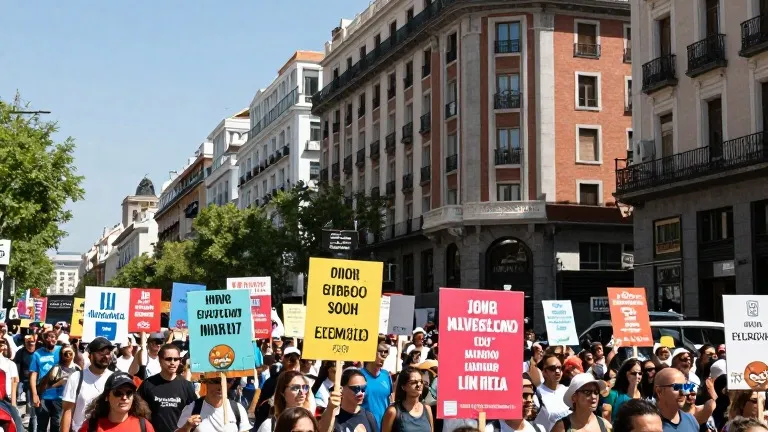
Ordinary voters in Spain are now sorting through a new layer of digital noise as the general election approaches. A campaign video released by the conservative People's Party, or PP, has drawn sharp criticism for using artificial intelligence to mimic the voices and faces of figures in the governing Socialist party. The clip, which went live on the party's social media accounts this week, has accumulated nearly two million views by Friday, forcing a rapid response from opposition leaders and legal experts alike.
The advertisement features AI-generated likenesses of several individuals associated with Prime Minister Pedro Sánchez's administration. In one segment, a digital copy of Sánchez's wife, Begoña Gómez, discusses receiving a university position due to her husband's political status. Another segment shows a deepfake of former prime minister José Luis Rodríguez Zapatero speaking about concealing jewelry in a safe. Both scenes reference ongoing legal investigations, although both individuals have denied any wrongdoing. The video also includes a likeness of Leire Díez, a former Socialist member, alluding to accusations that she worked to undermine the judiciary.
Óscar López, the minister for digital transformation, reacted strongly to the release. Speaking to broadcaster TVE, he described the video as a colossal lie told through official party channels. He pointed out that the label indicating the content was AI-generated appeared in tiny, nearly transparent text at the bottom of the screen. López warned that viewers unfamiliar with current digital tools could easily mistake the simulation for real footage.
Legal action followed the public outcry on Friday. Leire Díez filed a court complaint against the People's Party, seeking immediate removal of the advertisement. She alleged defamation and digital identity theft, arguing that the party used her image to imply specific political misconduct. While the legal experts consulted by the newspaper El País largely agreed the video was not illegal because it was clearly satirical and labeled, the complaint has introduced a procedural delay into the final week of the campaign.
Scholars and political analysts have weighed in on the ethical implications of the move. José Javier Olivas, an associate professor at the National University for Distance Education, stated that the use of deepfakes by a party claiming to revitalise democracy crossed a red line. He argued that placing words in the mouths of rivals constitutes disinformation, regardless of the satirical intent. Juan Antonio Lascuraín, a criminal law professor at the Autonomous University of Madrid, noted that legality is distinct from political appropriateness.
The controversy mirrors trends emerging in the United States ahead of its midterm elections. A recent report from the Wesleyan Media Project identified more than 200 AI-generated ads in the current cycle, most of them linked to Republican candidates. Erika Franklin Fowler, co-director of the project, observed that spending on such ads remains under $50,000, but much of the content lacks clear disclaimers.
The People's Party has dismissed the backlash as an overreaction. Borja Sémper, a party figure, stated that a problem exists only if there is malicious intent to deceive. He maintained that the video effectively highlights Socialist hypocrisy and that the digital nature of the production is obvious to any viewer. Current polls indicate the PP will likely win the November 29 vote, though it will require support from the far-right Vox party to form a stable government.
More Politics · World news · Report a business · Got a Story?