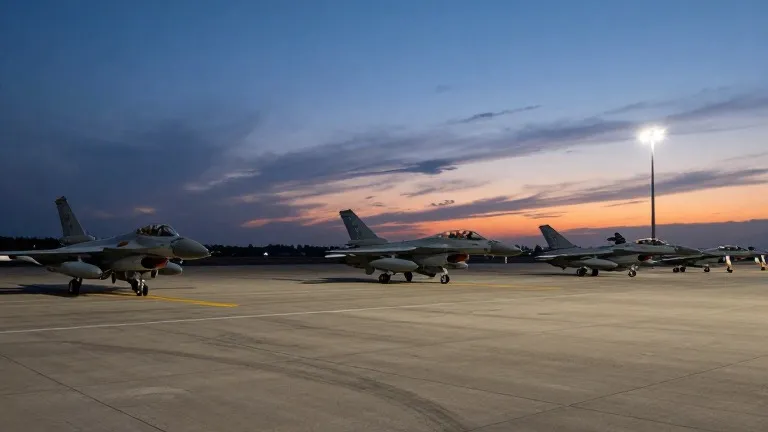
Pyongyang Starts Drone Factory, Tests Nuclear-Ready Missile
North Korea began mass-producing attack drones with Russian technical aid, following a 700-kilometer ballistic missile test that prompted Seoul to fire its first hypersonic missile in response.
By Adewale Fletcher ·
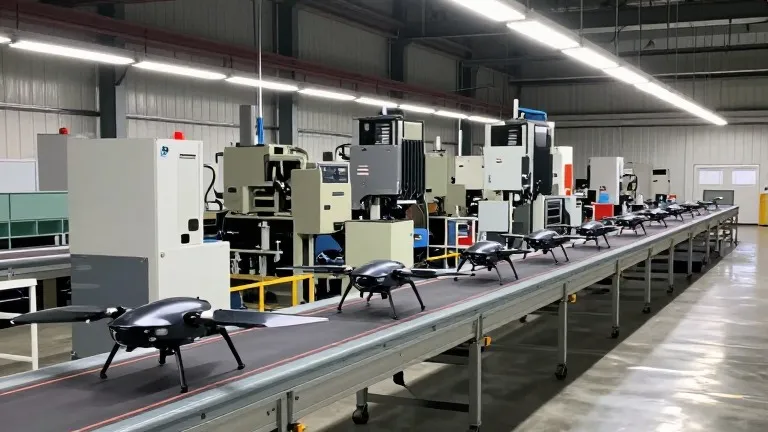
The alliance between Moscow and Pyongyang has deepened into a direct exchange of hardware for manpower, fundamentally altering the balance of power in East Asia. According to The New York Times, North Korea has initiated the mass production of attack drones while continuing to refine its ballistic missile capabilities, a surge driven largely by Russian support.
The immediate catalyst for this escalation was a tactical ballistic missile test in early October. South Korea and Japan estimated the missile traveled approximately 700 kilometers, a range sufficient to threaten the peninsula. North Korea claimed the projectile covered 1,000 kilometers and stated it was capable of carrying a nuclear warhead. Seoul reacted differently than in previous instances, launching its own hypersonic ballistic missile just five days later. President Lee Jae Myung watched the launch from the ground, a move analysts interpreted as a signal of growing anxiety over the speed of Pyongyang's advancements.
Analyst Anton Ponomarenko attributed the improved precision of North Korean weapons to the sharing of Russian deployment data and feedback. This technical transfer has increased the maneuverability and accuracy of Pyongyang's arsenal, making the threat to South Korea more substantial. Russia has also provided components for unmanned systems, enabling North Korea to build drones in large quantities. Observers note that Pyongyang has studied the use of inexpensive drones in Ukraine and the Middle East to saturate expensive air defense networks.
The partnership is not limited to technology. Moscow is exchanging military developments for soldiers, workers, and weapons. In a drill last month, North Korea simulated a combined assault on a target island, using a drone swarm alongside cruise and ballistic missiles striking from multiple directions. The New York Times suggests these evolving tactics will force South Korea and its allies to redesign their air defense systems at a high cost.
This report aligns with other recent disclosures about the bilateral relationship. Bloomberg reported in September that up to 25,000 North Koreans are working at Russian military plants, including facilities in Alabuga, Tatarstan, to produce military drones. A North Korean missile unit, potentially equipped with 120 ballistic missiles and six launchers, has also begun deploying in western Russia to strike targets in Ukraine.
The exchange of assets has been ongoing for months. In August, Russia requested KN-30 ballistic missiles from North Korea. In June 2026, Pyongyang announced tests of a modernized 240mm multiple-launch rocket system, a tactical ballistic missile, and a 155mm long-range artillery shell.