Robotics Reality Check: Tesla's Optimus Delivery Push Slips to Late 2027
Tesla has delayed external robot deliveries until late 2027 due to persistent hardware and software challenges, while competitors like XPeng and Boston Dynamics report similar timelines.
By Adewale Fletcher ·
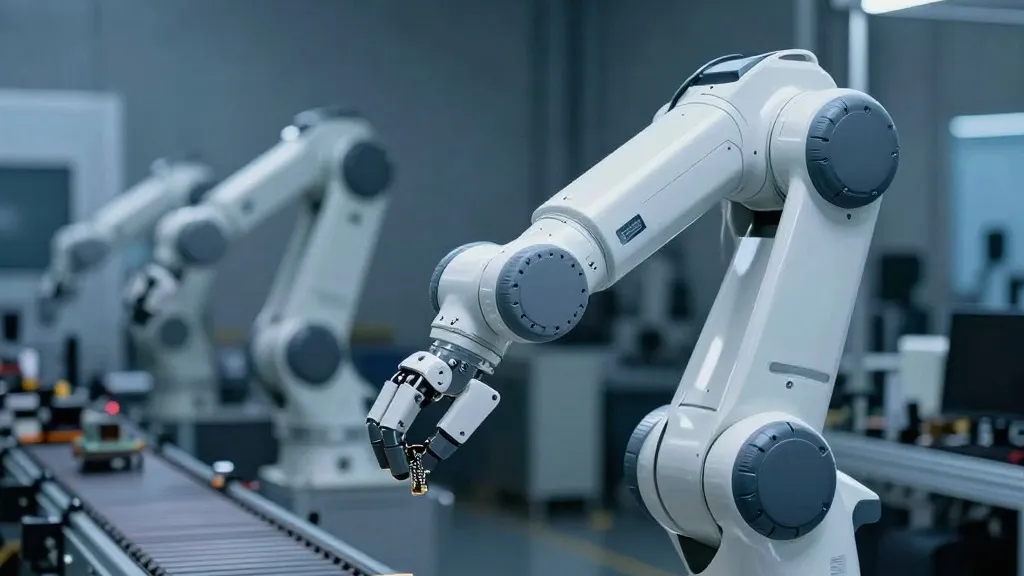
Tesla has officially pushed the timeline for delivering its Optimus humanoid robots to outside customers to the end of 2027. During the Q3 2026 earnings call, Elon Musk acknowledged that significant work remains before the robots are ready for widespread industrial use. The delay stems from unresolved issues in the robot's hands, overall durability, and artificial intelligence capabilities.
These challenges are not unique to Tesla but are shared by every major player in the humanoid robotics sector. Despite Musk's assertion that no other company is close to matching Tesla's progress, competitors such as XPeng and Hyundai's Boston Dynamics appear to be at a similar stage of development. This suggests a broader industry struggle rather than a singular setback for the electric vehicle maker.
Tesla has begun early production of Optimus at its Fremont facility, utilizing the high-volume line previously dedicated to Model S and Model X vehicles. While much of the infrastructure for a million-unit annual capacity is already installed, Musk estimates it will take at least a year to reach that rate. The target production speed is approximately 20,000 units per week, but ongoing design changes are slowing the ramp-up process.
The primary technical hurdles include the AI architecture, electromechanical design, and long-term reliability. A critical focus is ensuring the robots do not wear out after just one month of use. Musk expects these issues to be resolved by the end of next year. The initial external customers will be companies needing robots for dangerous, repetitive, or around-the-clock industrial tasks.
When pressed on specific design changes, a Tesla engineer identified the hand as one of the most difficult hardware components. The fingers must be soft enough to handle delicate objects yet durable enough to withstand constant wear. Unlike human skin, robot hands cannot heal from minor damages. Custom gears also present reliability concerns that the engineering team is actively addressing.
On the software side, Tesla faces a data collection challenge. Unlike its cars, which gather vast amounts of data for Full Self-Driving, Optimus does not yet have a large fleet for learning. To address this, Tesla plans to build 10,000 to 20,000 robots for an Optimus Academy where they will practice tasks. The company also plans to integrate its AI5 chip into the robots around April 2027. Musk promised a video within one or two months showing the robot performing unscripted tasks.
Recent reports indicate that previous Optimus units were not considered production quality. The Q3 shareholder letter describes the latest batch from Fremont as the first production-quality bots. This confirms that earlier units were prototypes or pre-production models. The hand and forearm contain over 100 small parts assembled by hand, and touch sensors have faced reliability issues. The AI previously took days to learn basic tasks, a problem that remains a focus for improvement.
The timeline for Optimus has shifted multiple times in recent years. In 2024, Musk predicted internal use in 2025 and high-volume external sales in 2026. By January 2025, he projected building 10,000 robots that year, with several thousand doing useful work by the end of the year. He later admitted that none were fully operational for useful work. Now, the external delivery target has moved to late 2027.
Competitors are making comparable strides. XPeng activated an automated IRON production line in Guangzhou in September, with over 80% of core processes automated. The IRON robot features 21 degrees of freedom in each hand and runs on XPeng's physical AI model. XPeng aims for mass production by the end of 2026 and deliveries in the first half of 2027, a schedule that mirrors or slightly precedes Tesla's. Boston Dynamics began producing its electric Atlas in January and has committed all its 2026 deployments to partners like Google DeepMind. Hyundai plans to deploy 25,000 robots across its plants in the coming years.
While Tesla may have built the most robots, the core challenge for the entire industry remains making them genuinely useful. Competitors have adopted different strategies to overcome the hand dexterity problem. Boston Dynamics, for instance, prioritizes sturdy grippers for industrial parts over human-like dexterity. This pragmatic approach allows for reliable part handling in factories, even if it is less visually impressive in demonstrations. The coming months will provide further clarity as Tesla delivers on its promise of an unscripted performance video.