Senate Math: How 13 Races Will Decide Control of Congress
Democrats need four seats to take the majority while Republicans can afford to lose only two in a highly contested midterms.
By Jonathan Hoffmann ·
The United States Senate is on the brink of a significant shift in power as 35 of its 100 seats come up for election on Tuesday. Republicans currently hold 53 seats while Democrats control 45, with two independents who caucus with Democrats. The arithmetic of the chamber dictates that Democrats must secure a net gain of four seats to claim a majority. In contrast, Republicans can lose only two seats and still maintain their current advantage. This tight margin makes every race critical and elevates the stakes for voters in thirteen battleground states.
The composition of the Senate races includes 33 regular elections and two special elections. Ballotpedia notes that 13 of these seats are held by Democrats and 20 by Republicans. The special elections will fill the remainder of the terms previously held by Marco Rubio in Florida and JD Vance in Ohio. Eleven senators are not seeking reelection, with four Democrats and seven Republicans vacating their seats. This turnover adds complexity to the race, as open seats often present different challenges for both parties compared to incumbent defenses.
Among the thirteen battleground races, Alaska features Dan Sullivan, a Republican incumbent, in a state that Trump won by 13.1 points in 2024. Florida holds a special election for the seat vacated by Rubio, with Ashley Moody as the Republican candidate. Georgia presents a challenge for Democrats as Jon Ossoff defends his seat in a state Trump won by 2.2 points. Iowa is an open seat following the retirement of Joni Ernst, in a state that Trump won by 13.2 points.
Kansas is another key contest where Roger Marshall, a Republican, is running in a state Trump won by 16.2 points. Maine stands out as a Democratic target with Susan Collins, a Republican, facing a competitive environment after Harris won the state by 6.9 points in 2024. Michigan is an open seat due to the retirement of Gary Peters, in a state Trump won by a narrow 1.4 points. Montana is an open seat following the retirement of Steve Daines, in a state Trump won by 19.9 points.
Nebraska features Pete Ricketts, a Republican, in a state Trump won by 20.3 points. New Hampshire is an open seat following the retirement of Jeanne Shaheen, in a state Harris won by 2.8 points. North Carolina is an open seat following the retirement of Thom Tillis, in a state Trump won by 3.3 points. Ohio holds a special election for the seat vacated by Vance, with Jon Husted as the Republican candidate in a state Trump won by 11.2 points. Texas features John Cornyn's seat in a state Trump won by 13.6 points.
Rating organizations have designated these races with varying levels of competitiveness. Maine is considered a toss-up by all four major rating groups. Iowa is rated as a toss-up or a slight Republican lean. Kansas is seen as a toss-up to a lean Republican race. Alaska is rated as a toss-up to a lean Democratic race, while Michigan is similarly rated as a toss-up to a lean Democratic race. Georgia is viewed as a lean to likely Democratic race, reflecting the intense competition in these states.
The Associated Press describes this election as a referendum on President Trump's second term, with voters expressing frustration over high prices and an unpopular war with Iran. AP-NORC polling indicates that 35 percent of U.S. Adults approve of Trump's job performance, while 25 percent approve of his handling of the economy. Approximately seven in ten Americans believe the country is heading in the wrong direction. These sentiments are driving voter engagement and shaping the narratives in the battleground states.
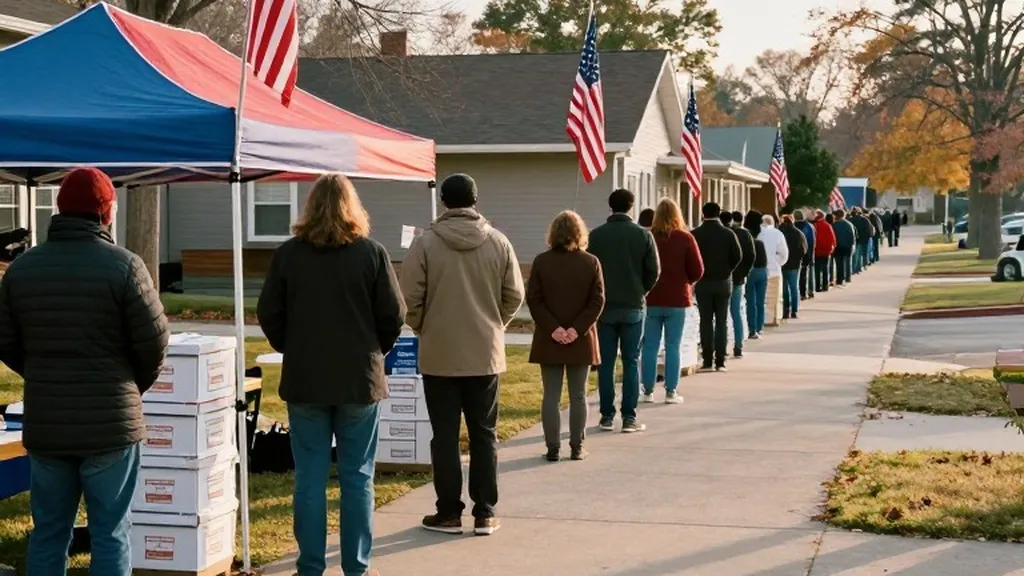
More than 57 million people had already voted as of Monday, surpassing the early vote totals of four years ago in many closely watched states. Republicans were bracing for the possibility of losing the House while fighting to hold the Senate. The AP notes that one or two seats could tip either chamber, highlighting the precarious nature of the current political landscape. Democrats, meanwhile, are described as cautiously optimistic about their chances in key races.
The financial aspect of the election is also notable, with the 2026 elections likely becoming the most expensive in history. Republican committees outraised and outspent Democratic committees, aided by Trump-affiliated groups and Elon Musk. However, at the candidate level, Democrats outraised their opponents. AP analysis of AdImpact data shows that 88.1 percent of Republican general election TV ad spending went to states and districts Trump won in 2024, including more than $850 million in areas where he won by 10 points or more.
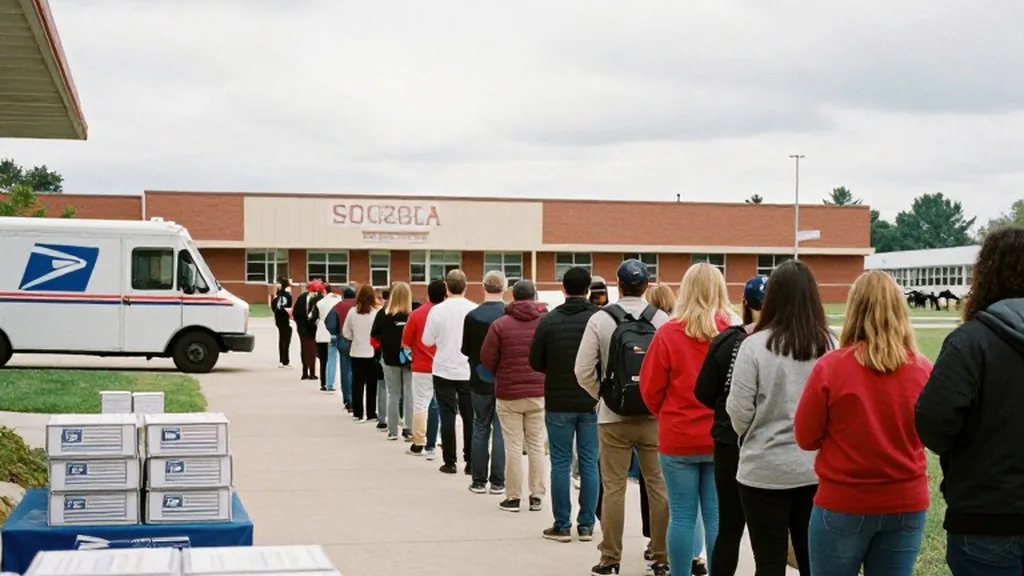
Election administration has faced its own set of challenges. A federal judge temporarily barred the Trump administration from carrying out a plan to prevent noncitizen voting, a move critics argue risks disenfranchising eligible voters. Another judge ordered the administration to stop demanding that California election officials segregate ballots cast by people on lists of suspected noncitizens. The U.S. Postal Service added hours, staff, and special lines to ensure mail ballots are counted on time, reflecting the logistical hurdles of a high-turnout election.
The outcome of these Senate races will have far-reaching implications for the balance of power in Washington. If Democrats win even one chamber, investigations and possible impeachment proceedings are likely to follow. House Democratic Leader Hakeem Jeffries, who would be the first Black speaker if Democrats take the House, has outlined a 100-day agenda focused on the cost of living and oversight. A strong Democratic night could also boost potential 2028 candidates such as Gavin Newsom, JB Pritzker, and Pete Buttigieg, while complicating the path for Vice President JD Vance. Republicans have attempted to beat the traditional midterm pattern of the president's party losing seats through redistricting, but new districts in states like Florida may not vote as initially drawn.