Blue-Green Glow Becomes the Federal Standard for Robotaxis
The NHTSA seeks to unify how self-driving cars signal their status to the public and police, replacing a fragmented visual landscape with a single, consistent color code.
By Adewale Fletcher ·
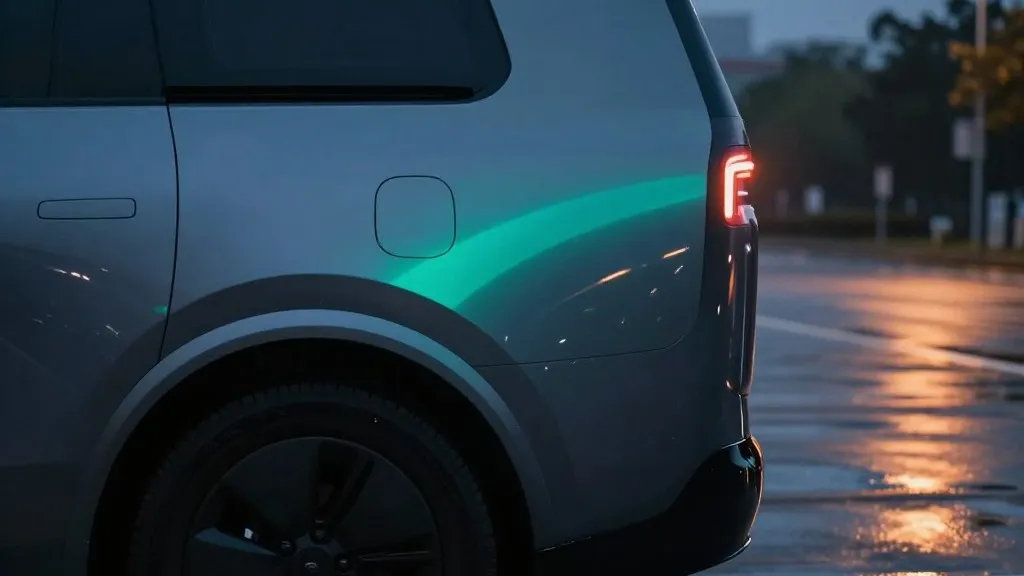
The National Highway Traffic Safety Administration has identified a specific hue as the universal signal for autonomous vehicles, proposing that robotaxis display a distinct blue-green light to indicate they are operating without a human driver. This move attempts to resolve a long-standing debate within the industry regarding how to visually distinguish these machines from conventional traffic. The agency released proposed amendments to Federal Motor Vehicle Safety Standard No. 108, which controls vehicle lighting, aiming to create a uniform national standard.
The primary objective of the new regulations is twofold: it seeks to reduce administrative friction for manufacturers building driverless designs while simultaneously standardizing the visual language these vehicles use to communicate with their surroundings. NHTSA asserts that the specific cyan marker lamps will allow law enforcement and other road users to clearly and consistently identify when an automated driving system is in control. By selecting this particular shade, regulators intend to fill a visual gap in the existing spectrum, which is already crowded with red, amber, white, and flashing blue or red lights reserved for braking, signaling, headlights, and emergency services.
While the federal proposal is new, the concept is not entirely without precedent. Mercedes-Benz previously secured state-level approval to use turquoise lights on its Level 3 Drive Pilot models, though the automaker has since shifted its strategy toward a Level 2++ system. Nevertheless, NHTSA aims to establish a broader national framework that companies such as Waymo, Nuro, and Zoox, along with major automakers including GM and Mercedes, can all adopt in a uniform manner.
Under the current draft, the installation of these cyan lights would remain optional for manufacturers. However, by defining federal requirements for their color, brightness, and placement, the agency intends to ensure that any company choosing to install them follows a consistent and legal configuration. This approach prevents the emergence of a patchwork of different colors and signals across various brands, thereby reducing confusion on the road.
In addition to introducing the new light, the proposal seeks to eliminate existing rules that are less relevant to vehicles without human occupants. Current regulations mandate physical hazard switches, manual beam shifters, and turn levers inside the cabin. NHTSA proposes removing these requirements, recognizing that they are largely unnecessary for automated systems. The agency also plans to update the 12.8-volt testing standard to allow manufacturers to utilize modern LED systems without facing unnecessary administrative hurdles. Furthermore, it is considering relaxing rules regarding the physical positioning of high-beam and low-beam lights relative to one another.
These regulatory adjustments align with a broader Department of Transportation initiative to accelerate the deployment of autonomous vehicles. The federal government is working to simplify the process for automakers who are designing cars that may lack traditional human controls, such as steering wheels and pedals. By streamlining the rules, officials hope to remove barriers that have historically slowed the integration of driverless technology into the mainstream market.
Despite these forward-looking proposals, current rules remain in full effect until the new standards are finalized and adopted. Regulators continue to enforce existing requirements as written, which has led to recent scrutiny of prominent self-driving models. Last month, NHTSA initiated an audit query into the Tesla Cybercab to examine the technical data and processes Tesla relied upon when certifying the vehicle.
The investigation focuses on the absence of specific design features, including sideview mirrors, pedals, and a steering wheel, all of which are currently required under federal standards for conventional vehicles. This scrutiny highlights the transitional period the industry is navigating, where emerging autonomous designs must still conform to regulations originally crafted for cars with human drivers at the helm.
More Business · Tech news · Unethical Practices · Report a business · Got a Story?