Border Device Searches Spike 32% as CBP Near Historic High
U.S. officers inspected over 52,000 gadgets in the first nine months of the fiscal year, a rate that puts pressure on privacy advocates and raises questions about the scope of border power.
By Elijah Fitzgerald ·
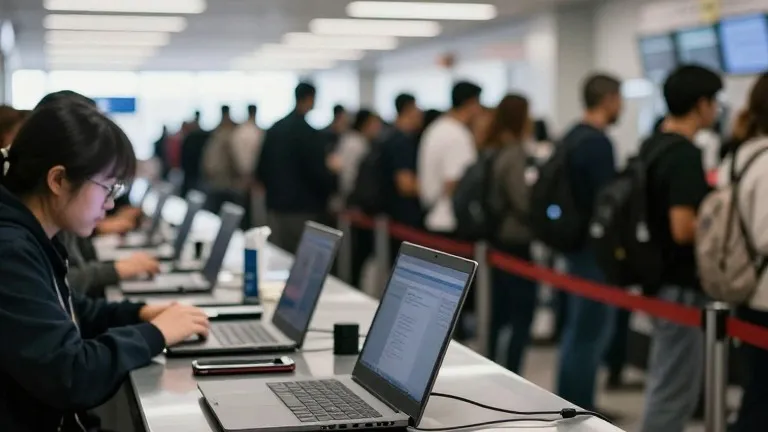
U.S. Customs and Border Protection agents searched 52,080 electronic devices between October 1, 2025, and June 30, 2026. This total represents a 32 percent increase over the same period last year, when officers examined 39,251 devices. The current pace positions the agency to approach the all-time record of 55,424 searches set during the entire 2025 fiscal year.
The agency categorizes the bulk of these inspections as basic searches. Officers conducted 47,517 of these without requiring reasonable suspicion of wrongdoing. The remaining 4,564 were advanced searches, which permit agents with reasonable suspicion of unlawful activity or national security concerns to analyze or copy device contents. CBP did not break down these figures by location, such as the Canadian or Mexican borders, or by mode of entry, including airports versus land crossings.
Jessica Turner, a CBP public affairs officer, noted that these checks affect a small portion of total traffic. She stated that only 0.01 percent of the 419 million travelers who entered the country in 2025 had their devices searched. Turner said the process targets digital contraband, terrorism-related content, and information relevant to admissibility. The agency’s data release withholds specific counts of U.S. citizens versus non-citizens, a detail usually found in annual reports.
Privacy experts argue the rising numbers warrant closer legislative review. Esha Bhandari, director of the ACLU’s Speech, Privacy and Technology Project, said the lack of explanation from the government makes it difficult to pinpoint the cause of the surge. She argued that the government tends to use its search power to the detriment of traveler privacy. Bhandari cited anecdotal reports of travelers being questioned about their political opinions, writing, or religious practices.
In January, CBP expanded its guidelines to include flash drives, SIM cards, GPS systems, drones, and smartwatches in the definition of searchable devices. The update also added narcotics smuggling, firearms, and transproprietary information theft to the list of detectable crimes. Bhandari described these changes as minor procedural adjustments but suggested the broader increase reflects technological advances and a lack of federal court limits on government authority.
Laura Dawson, executive director of the Future Borders Coalition, said the data is hard to contextualize without knowing the total number of people who crossed the border. She pointed to the World Cup held this summer and increased security cooperation between Canadian and U.S. agencies as potential factors. Dawson noted that one in 9,000 crossings leads to a U.S. inspection, while one in 14,000 results in a search on the Canadian side. The Canada Border Services Agency has not yet released its 2026 statistics.
More Business · World news · Unethical Practices · Report a business · Got a Story?