Britain Agrees to Slavery Reparations Talks as Commonwealth Summit Begins
Caribbean leaders push for concrete redress while the UK government moves from opposition to structured dialogue.
By Elijah Fitzgerald ·
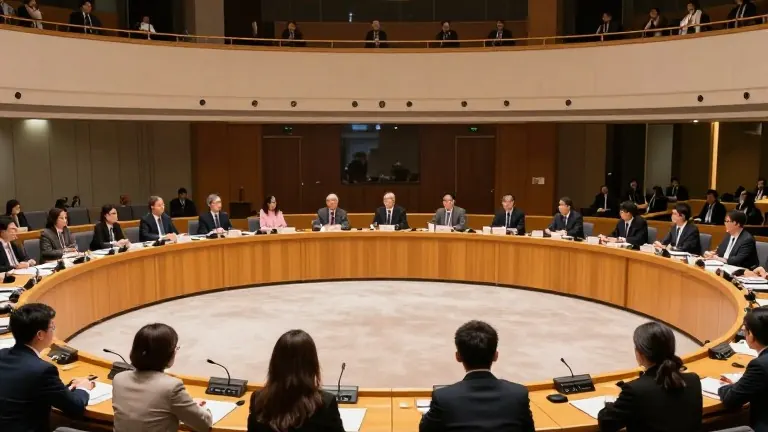
The Commonwealth Heads of Government summit opened in Antigua and Barbuda on Sunday, 2026, with slavery reparations at the center of political debate despite the issue being absent from the official agenda. The 56-nation bloc focused its stated priorities on trade, climate resilience, sustainable debt, democracy, and youth investment, yet the shadow of historical redress loomed over every session. This disconnect between the formal schedule and the political reality reflects a sharp divide between European and Caribbean member states over how to address the legacy of the transatlantic slave trade.
British officials previously resisted including reparations in the summit discussions. Ralph Gonsalves, a former prime minister of St Vincent and the Grenadines and a senior figure in the Repair Campaign, stated that the UK was vehement in its opposition. He noted that British and Canadian officials warned that Prime Minister Andy Burnham might not attend if the subject was formally included. Gonsalves also disputed a circulating claim that India opposed the agenda item, pointing to India’s support for a United Nations general assembly resolution on the matter in March 2026.
The UK’s position shifted dramatically on Friday when Prime Minister Burnham announced his government would enter structured dialogue and consider an apology. This marked the first time a British leader had agreed to such formal talks. Gonsalves described the UK as coming to the conversation after a relentless campaign by Caribbean nations and a growing global reparations movement. He emphasized that the issue had become impossible to ignore due to actions in the UN, Africa, the Caribbean, and within the British Parliament.
Caribbean leaders welcomed the shift but stressed that agreement on specific forms of redress remains the primary objective. Irfaan Ali, the president of Guyana, called for a Commonwealth subcommittee to define the details of the dialogue within six to 12 months. He argued that the talks should move beyond pricing the indignity of slavery and toward addressing its developmental consequences. Ali proposed a system where the UK government and its financial institutions work with nations to identify gaps in health, education, social services, and infrastructure.
Mia Mottley, the prime minister of Barbados, acknowledged that Burnham was breaking new ground but maintained that views remained divided. She stated that the two sides would plainly and respectfully acknowledge their differences. Mottley identified an apology, investment in health and education, tackling systemic poverty, and fairer debt terms as areas where agreement could be reached. Philip Davis, the prime minister of the Bahamas, added that the discussions were about the enduring consequences of slavery and the need for meaningful redress rather than just historical remembrance.
The summit coincides with the 45th anniversary of Antigua and Barbuda’s independence from British colonial rule. King Charles is expected to attend but has indicated he will not follow Burnham in offering a full apology. Protests are scheduled as the monarch and the prime minister travel through St John’s. Campaigners are using billboards, placards, T-shirts, letters, and a candlelight vigil to demand an apology and reparations for the thousands of Africans trafficked to the region.
Kemi Badenoch, the leader of the opposition, told broadcasters on Sunday that an apology would be a navel-gazing distraction. She described slavery as an evil in which people from every continent participated. Gonsalves responded that he wanted to sit down with Badenoch to explain the concept of reparatory justice. He suggested that the process could help heal fractures arising from Britain’s multicultural and ethnic tensions, though no immediate comment came from the British government on the summit’s developments.