Four and a Half Years: The Hidden Toll of Stephen Hubbard's Captivity
Former cellmates describe severe physical and psychological abuse endured by the American citizen during his prolonged detention in Russia.
By Jonathan Hoffmann ·
A profound tension has emerged regarding the final months of American citizen Stephen Hubbard’s incarceration, as two former Ukrainian detainees allege that the retired teacher faced systematic torture during his time behind bars. Their accounts challenge the narrative of a relatively benign hold, painting instead a picture of deliberate degradation and physical suffering that persisted for over four years.
Dmytro Khyliuk, a journalist, first encountered Hubbard at the Novozybkov facility in Bryansk in September 2022, near the Ukrainian border. Khyliuk stated that prison officials identified the American immediately and targeted him with verbal abuse and threats from his arrival. Ihor Shyshko, a captured Ukrainian soldier who was also held in the same facility, confirmed that Hubbard’s nationality made him a focal point for the guards. Shyshko recalled being forced to learn Russian, sing the national anthem, and recite regulations he could not read, suggesting a pattern of humiliation designed to break the detainee.
Shyshko provided specific details of the physical violence Hubbard endured, describing beatings to the legs, back, and arms, as well as the use of a stun gun. The former soldier also noted that Hubbard was frequently denied food and medical attention and left in freezing conditions. He further alleged that prison staff subjected the American to sexual humiliation and abuse for their own amusement. These testimonies align with earlier statements made by Hubbard’s family, who have long maintained that he was mistreated during his detention.
Hubbard was captured in April 2022 following the Russian occupation of Izyum, the eastern Ukrainian city where he resided with his partner. Russian authorities accused him of serving in the Ukrainian armed forces and sentenced him to six years and ten months at a Moscow trial. While awaiting that verdict, he was held alongside Khyliuk and Shyshko, who witnessed his deteriorating health firsthand.
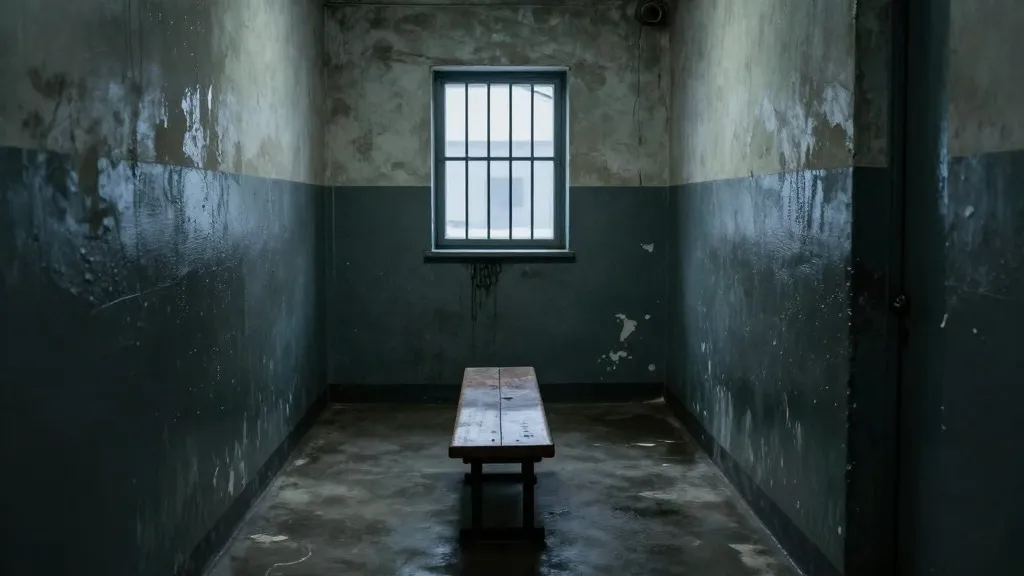
Khyliuk observed a steady decline in Hubbard’s condition while they shared neighboring cells. He heard frequent complaints and noted that guards increasingly summoned Hubbard to the prison doctor. The facility was characterized by broken windows and extreme cold, forcing inmates to seek warmth in bathrooms during their limited time outside their cells. Khyliuk described the environment as worse than in the adjacent prison, highlighting the harshness of the confinement.
Upon transfer to the Pakino facility, Shyshko reported that Hubbard’s physical state had worsened significantly. He described severe rotting on Hubbard’s knees and feet and recalled having to bandage him himself after a doctor refused to do so. The detainees described a monotonous diet of porridge, bread, and potatoes, accompanied by a daily regimen of beatings, forced running, and stress positions. Shyshko also recounted an incident where a handler directed a dog to bite prisoners.
Khyliuk claimed that Hubbard was concealed from visiting International Red Cross staff to hide his poor condition shortly after the transfer to Pakino. The Red Cross stated that it seeks to assess every individual it is granted access to and continues negotiations with conflict parties regarding these visits. Hubbard disappeared from the prison records in 2024, leading Khyliuk to believe he had been released before his own return to Ukraine in August 2025 via a prisoner exchange.
The Kremlin released the 74-year-old on Thursday, the same day US special envoy Steve Witkoff met President Vladimir Putin in St Petersburg. Witkoff referred to the Russian leader as a humanitarian, while President Donald Trump stated he had requested Hubbard’s release during a phone call the previous week. Khyliuk expressed relief at Hubbard’s freedom, noting that it was not his war, though he criticized the timing as shameful political publicity. Shyshko expressed hope that those responsible for the abuse would eventually face justice.
Khyliuk compared the overall experience of Russian captivity to the Stalin era, labeling it a torture machine. The release marks the end of a long ordeal for Hubbard, but for his former cellmates, the story raises broader questions about accountability and the treatment of high-profile detainees in the ongoing conflict.