Melania Trump Mediates Oleshky Truce Amidst Drone Network Disputes
A local ceasefire begins October 27 to aid 2,000 civilians, while Ukrainian forces report continued limitations on Starlink satellite speeds.
By Adewale Fletcher ·
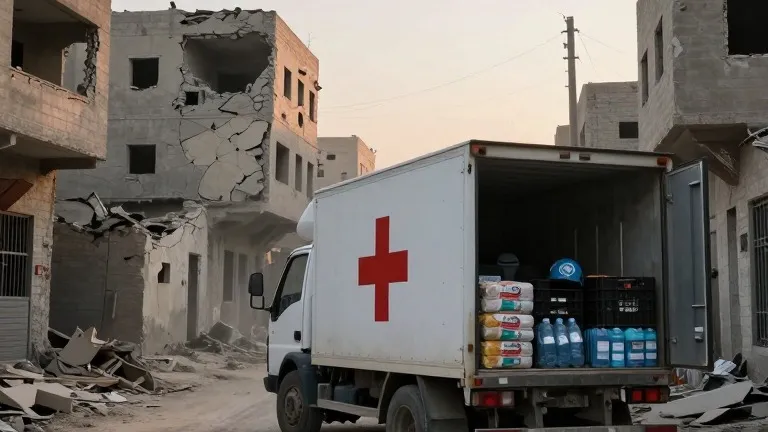
The White House confirmed on Friday that Russia and Ukraine have reached a local ceasefire agreement for the city of Oleshky. Under the new terms, all military operations in the southern Ukrainian town will halt beginning October 27. The pause is designed to allow humanitarian aid to reach the remaining population and to facilitate the evacuation of civilians. This arrangement follows weeks of intense pressure from both governments to secure a humanitarian pause in the conflict zone.
Oleshky has been under Russian occupation since February 2022. Residents describe severe shortages of food, water, and electricity. An estimated 2,000 people remain in the city. Some survivors have reported subsisting on weeds, boiled grass, and limited rations. Ukrainian officials had previously stated that Russia rejected earlier calls for a ceasefire. Pope Leo XIV, United Nations representatives, and European Union officials also urged for a pause in fighting as recently as mid-October.
First Lady Melania Trump’s office played a central role in finalizing the deal. Her representative worked directly with Russian and Ukrainian leaders to establish the terms. Melania Trump stated that residents wishing to leave would receive coordinated transportation to their chosen destination. She noted that some evacuees would likely choose to move to Russia while others would head to Ukraine. Ukrainian Ombudsman Dmytro Lubinets told Reuters on Friday that the mission will include demining roads into the town. He added that officials aim to deliver enough aid to meet the needs of everyone and to extend the effort beyond a one-time event.
Separate tensions continue to strain relations between Kyiv and Washington. Ukrainian forces report widespread disruption to the Starlink satellite network. Speeds remained capped at approximately 100 miles per hour throughout Friday. Serhii Beskrestnov, a military expert advising President Volodymyr Zelenskyy, said no lifting of these restrictions had been observed. The speed cap prevents drones and other military equipment from staying connected at high speeds. This limitation hampers offensive drone operations and efforts to intercept incoming Russian attacks.
President Donald Trump addressed the Starlink issue on Friday, saying he had heard the problem was fixed but would speak with Elon Musk if it was not. The slowdown began last week after Trump and Musk publicly criticized Zelenskyy over strikes on Russian oil refineries. Both men have denied responsibility for the network changes. British Prime Minister Andy Burnham spoke with Trump by phone to stress the need for full Starlink access, according to Downing Street. The satellite issue, combined with a temporary suspension of US intelligence sharing, has pushed bilateral relations to a new low.
Russia launched another overnight barrage on Ukraine while Kremlin spokesperson Dmitry Peskov announced that trilateral talks are expected to resume in Abu Dhabi in November. Previous rounds of talks produced no breakthrough. Moscow and Kyiv remain far apart on key issues. Russian demands include a Ukrainian withdrawal from eastern territory, a drastic reduction in the size of the Ukrainian military, and neutral status that would rule out NATO membership. President Vladimir Putin told a Russian state television reporter on Thursday that the lands lost by Kyiv are historically Russian. He insisted that Moscow would achieve all objectives of its full-scale invasion.
Russian Deputy Prime Minister Alexander Novak said on Friday that three tankers were heading to the United States. He stated that Russian companies could supply 500,000 metric tonnes of diesel in October. This import deal is part of an effort by the US to lower energy prices before the midterm elections. The move has added to diplomatic friction between the two nations. The Oleshky ceasefire stands as a localized humanitarian measure while these larger strategic and economic disputes continue to unfold.