
Connecticut Democrats plan major spending on health and transit after election sweep
Gov. Ned Lamont cites budget surpluses to fund new healthcare options and infrastructure projects in his third term.
By Jonathan Hoffmann ·
Connecticut residents may see changes in their health insurance options and local infrastructure spending as state Democrats move forward with new initiatives. Governor Ned Lamont announced plans to overhaul healthcare funding and boost transportation projects following a decisive election victory.
Lamont said the state is in its strongest fiscal position in years, giving the administration the resources to pursue what he called big things. He noted that Connecticut has posted budget surpluses every year of his tenure. The state used those reserves to pay down 11.5 billion dollars in long-term pension debt, reducing annual operating costs by hundreds of millions of dollars.
The 2026 election results gave Democrats a veto-proof majority in the 187-seat General Assembly. Voters reelected Lamont and Lt. Gov. Susan Bysiewicz to third terms. Democrats also won all five congressional districts and every other statewide race. With no U.S. Senate contest in the cycle, the party secured full control of state government.
Lamont outlined his top priority: a new health insurance product called the Connecticut Option. This plan, designed by the state but run by private insurers, would be added to the Access Health CT exchange. It targets small businesses, nonprofits, and individuals. The legislature included 1 million dollars in the current 27.1 billion dollar budget to study the feasibility of this initiative.
Lamont said his administration intends to present a plan to the legislature during the 2027 session. He is also negotiating with state employee unions to include retirees and current workers in this network. He stated that expanding the pool of participants would reduce costs for everyone. The administration is currently drafting a successor agreement on health and pension benefits for state employees.
Separate from the Connecticut Option, the legislature authorized the Department of Social Services to explore a basic health plan. This program would cover individuals with incomes between 133% and 200% of the federal poverty level. The federal government would fund 95% of the subsidies for these individuals. Some Democratic legislators favor this approach over the governor's proposal.
The governor also proposed a Medicaid fee for large employers. Companies with more than 100 employees would pay up to 1,000 dollars for each employee enrolled in the HUSKY Health program. Nonprofits with 1,000 or more employees would face the same fee. Lamont estimated this would raise 100 million dollars. The Connecticut Business & Industry Association opposes the measure, calling it a new tax on job creators.
In education, Lamont is waiting for recommendations from a Blue-Ribbon Commission he established in April. The panel, which includes parents, experts, and legislators, must deliver a strategic plan by January 15, 2027. The commission will review the Education Cost Sharing grant program and special education funding formulas. Lamont said he wants to regionalize services and negotiate with private providers to reduce costs for municipalities.
Transportation funding remains a key focus. Lamont said he will work with the legislature to secure state matching funds for federal projects. The Infrastructure Investment and Jobs Act provided Connecticut 4 billion dollars for highways and bridges and 2 billion dollars for rail. The state must provide 20% of the matching funds to continue these projects. Lamont noted that the state failed to meet this requirement eight years ago and wants to maintain momentum now.
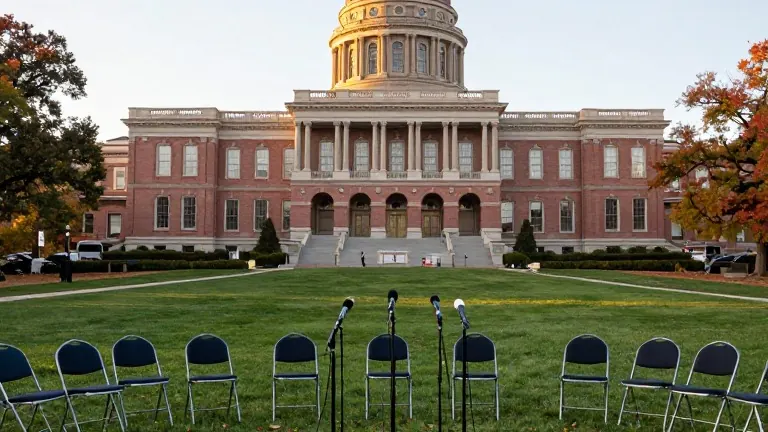
The administration will hold a news briefing with other Democratic leaders on the south lawn of the state Capitol. Lamont said he anticipates presenting his healthcare plan to the legislature in the upcoming session. The state will also continue to stand up to federal cutbacks, including a planned 1 billion dollar reduction in Medicaid funding for Connecticut.