Tennessee Execution Team Admits Veins May Have Ruptured Before Lethal Doses
Court filings reveal that medical staff struggled for hours to insert IV lines and warned of damaged veins before injecting a death row inmate with double doses of pentobarbital.
By Elijah Fitzgerald ·
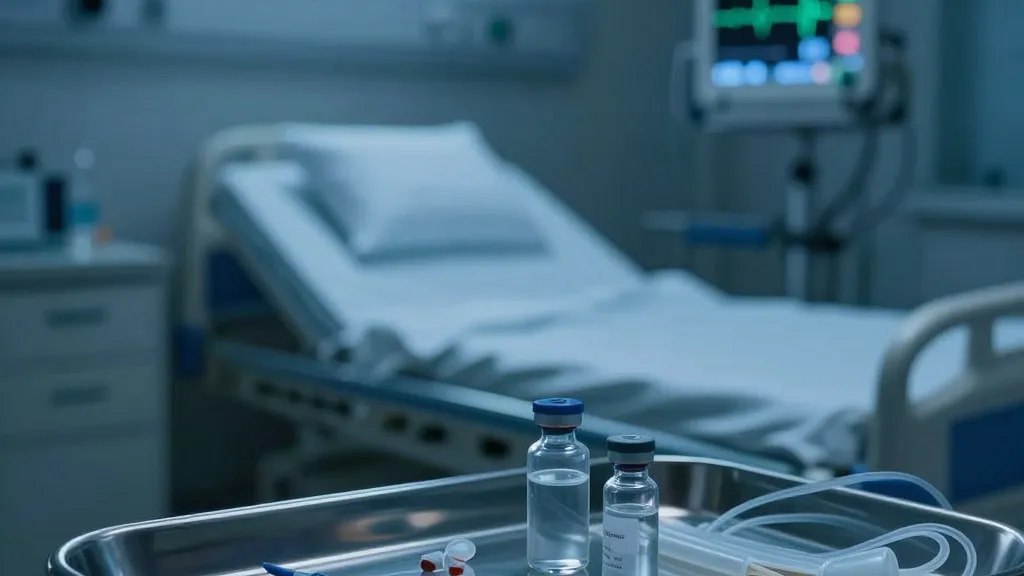
Ten needles. That is the approximate count of instruments a medical team used in a desperate, hour-long effort to find a working vein in the arm of Christa Pike before the state of Tennessee began injecting her with lethal drugs. A new court filing provides a minute-by-minute account of the chaos that unfolded during the September 30 attempt on Pike's life, offering the most granular look yet at the procedural struggles that preceded her survival.
The legal document, submitted by attorney Randy Spivey, details how the medical team could not establish a functional intravenous line in Pike's left arm for nearly sixty minutes. Spivey noted that the staff expressed growing concern that the veins might have ruptured, a colloquial description of the damage they feared had already occurred. This struggle happened before the first dose of pentobarbital was even administered, setting the stage for a procedure that deviated significantly from the state's standard protocol.
Pike, 50, was convicted in 1995 for the stabbing death of her classmate Colleen Slemmer. At the time of the crime, she was only 18 years old and committed the act with her boyfriend. Her age at sentencing made her one of the youngest women in the nation to receive the death penalty. The state's current protocol mandates a second dose of pentobarbital if the first does not result in death, but it remains silent on what happens if an inmate survives that second injection, a gap that became critical during the September event.
According to Spivey's timeline, the medical team began working at 6:34 p.m. They succeeded in placing a line in Pike's right arm within six minutes. The left arm proved far more difficult. Pike reportedly winced and grimaced as staff moved needles around, and she even offered suggestions on where to look for a usable vein. By 6:57 p.m., one team member voiced the fear that a vein was "blowing." By 7:07 p.m., another member stated, "I think it's blown." Despite these warnings, the team declared the left line successful at 7:13 p.m.
The injection process began shortly after, but the team pushing the drugs from an adjacent room seemed to have concerns, repeatedly asking the IV staff to check Pike's left arm. Pike described a burning sensation and said her arm felt like it was about to burst. Within ten minutes of speaking with a spiritual adviser, she began making an agitated snoring sound. Over the next half hour, she strained, flinched, and appeared to struggle for air.
Spivey was initially denied a phone in the witness room and had to walk a seven-minute route to call his colleagues. He urged them to stop the execution, noting that a third dose was not authorized, and demanded immediate medical care for Pike. He was informed at 8:50 p.m. that an ambulance was en route. By 9:14 p.m., the vehicle arrived at the hospital, where staff performed life-saving measures after Pike had been placed on a ventilator for several days.
The filing was part of a broader legal challenge to Tennessee's lethal injection procedures. Kit Thomas, an attorney representing other inmates on death row, stated that the recent events confirmed their predictions about the likelihood of botched executions. He argued that without substantial changes to the protocol, similar incidents will continue to occur. Pike has since regained consciousness and returned to prison after being discharged from the hospital, surviving a procedure that left her in critical condition.